Meet the Family Episode 14: John Franklin and Mary Catherine (Carr) Crossley

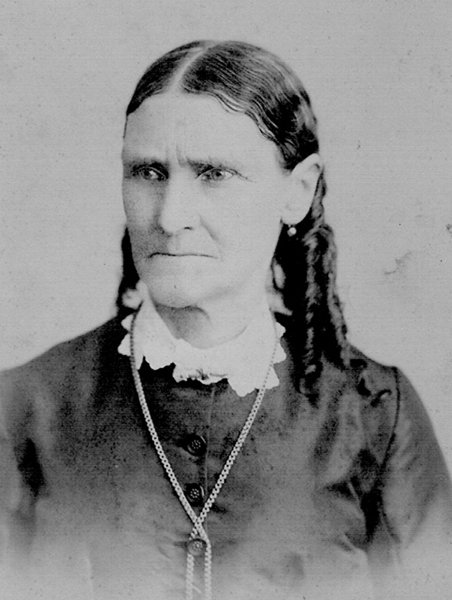
At long last we begin to get close to ancestors who some people living can still remember. Stories about Frank and Mary Catherine Crossley still make their rounds through the Styer family. John Fanklin Crossley (1/28/1861-12/17/1928) was the son of Reuben and Martha (Wilson) Crossley. On January 8, 1891, he married Mary Catherine Carr (5/2/1864-7/31/1936).
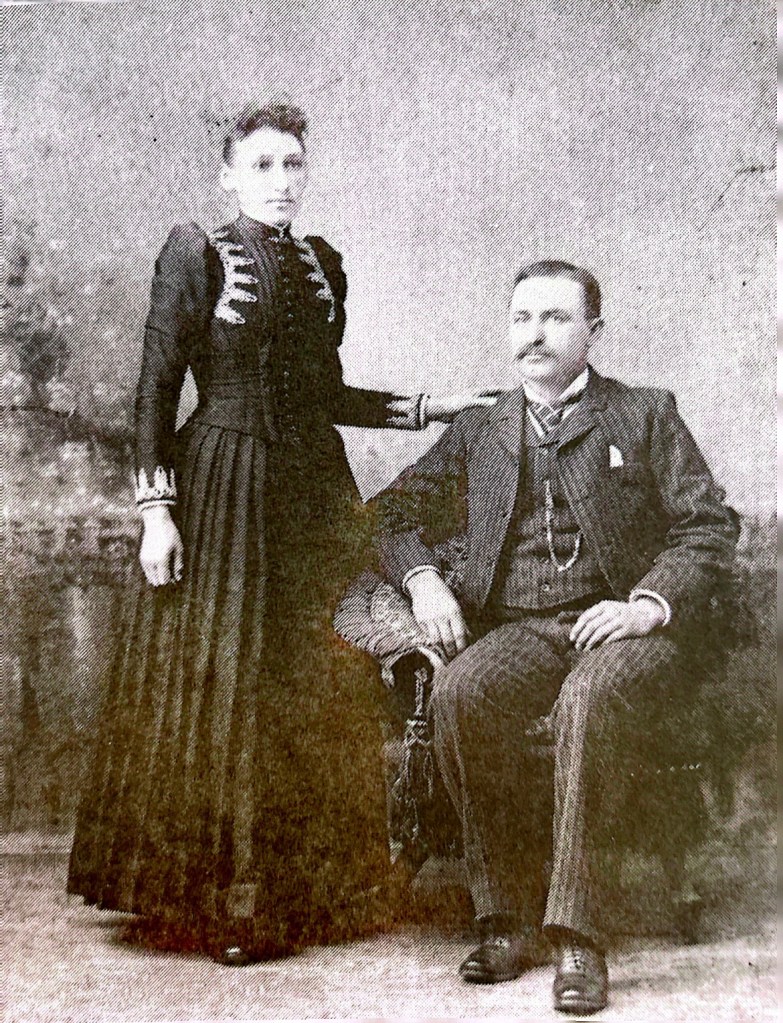
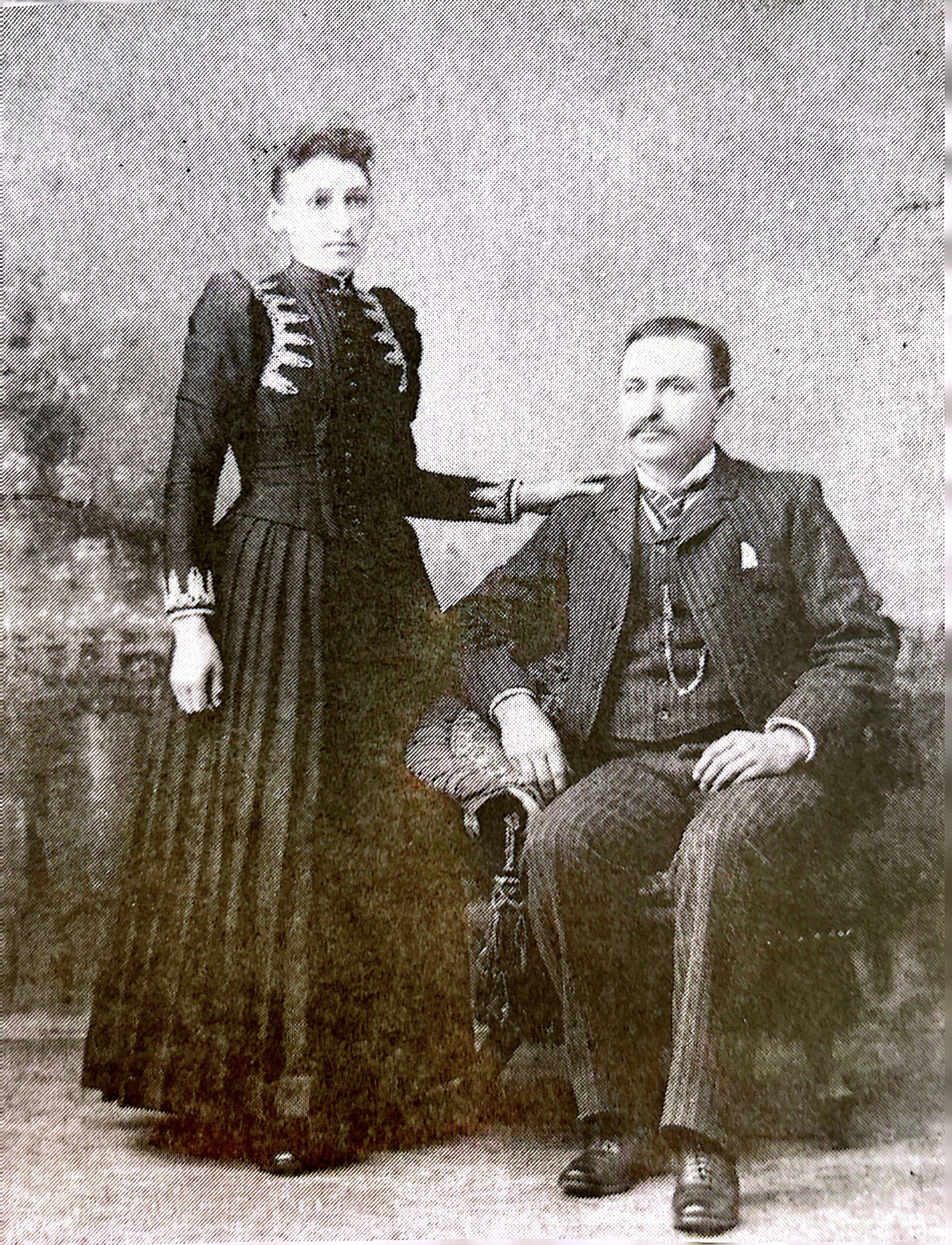
Mary Catherine and J. Franklin Crossley, about 1891

The Carr Family:

Mary Carr was the daughter of Alexander and Harriet (Wintersteen) Carr.  The Carr family may have originated in Delaware, but migrated to Pennsylvania when Archibald (2/15/1789-8/15/1853) and Catherine Carr (7/17/1837) moved to Montour County. They are buried at Columbia Hill. Archibald and Catherine Carr had ten Children, most of whom moved to St. Joseph’s County, Michigan. Their son, Alexander Carr: 1/27/1822-5/14-1891 married Harriet Wintersteen (7/8/1833-9/17/1900). The two are buried at Dutch Hill Cemetery.
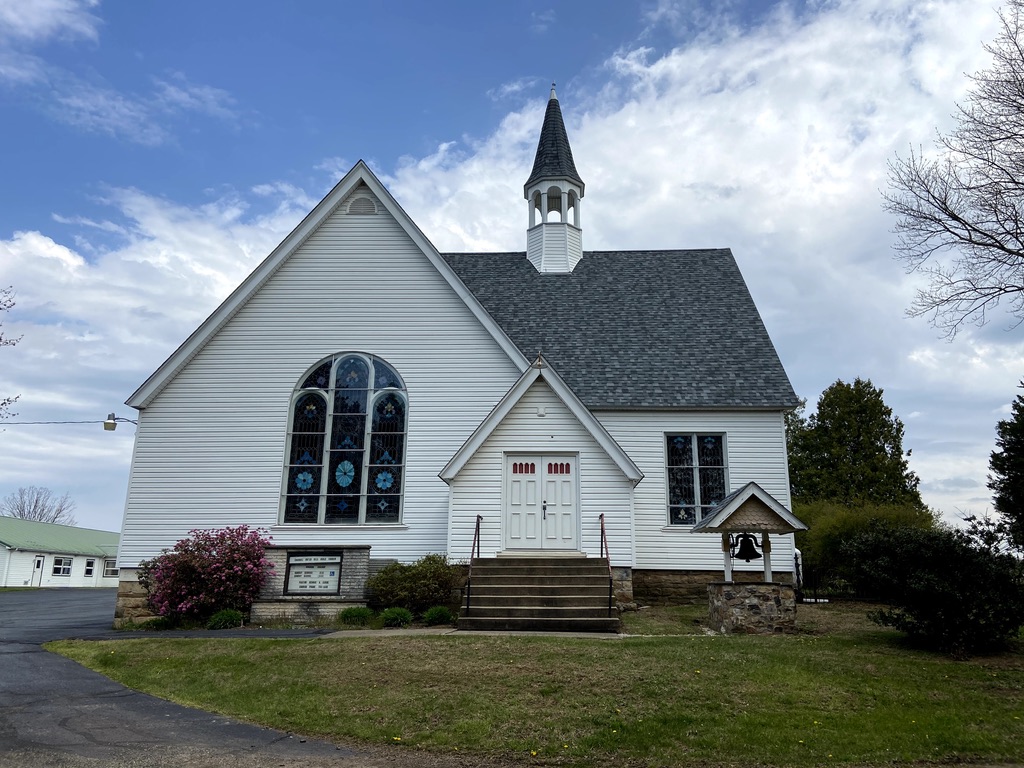
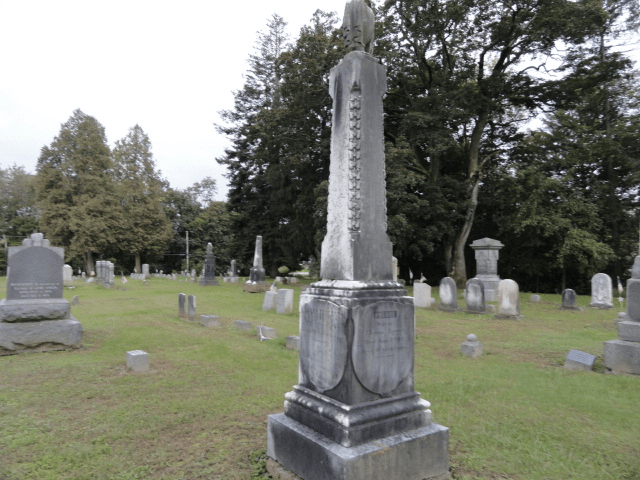
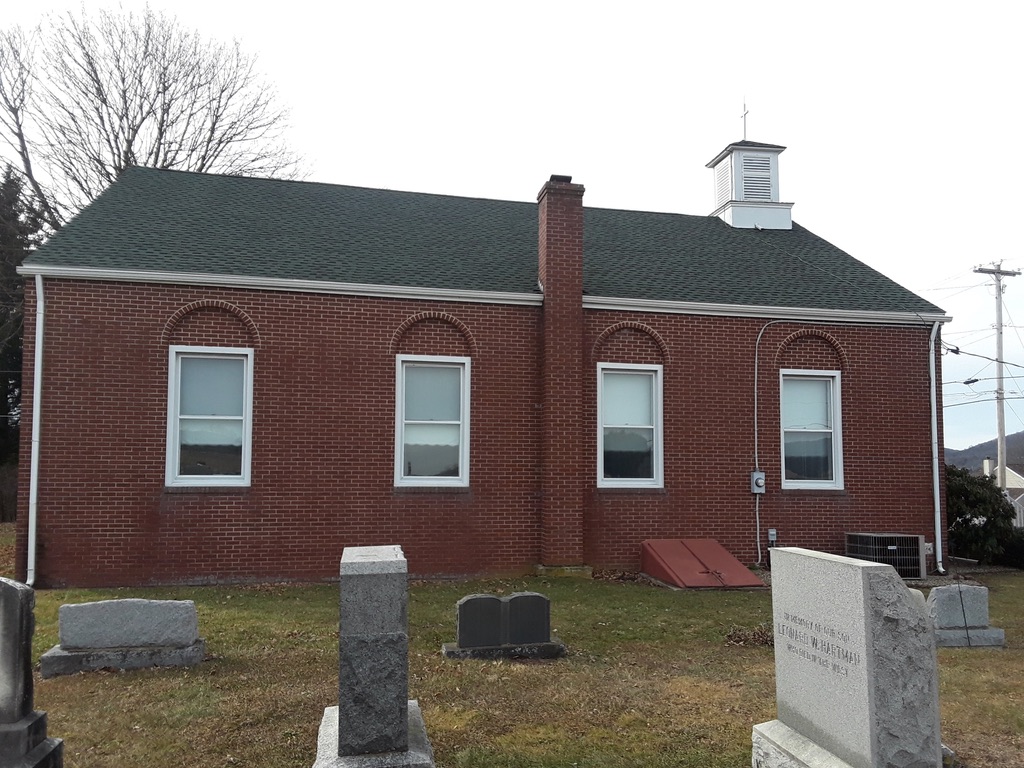
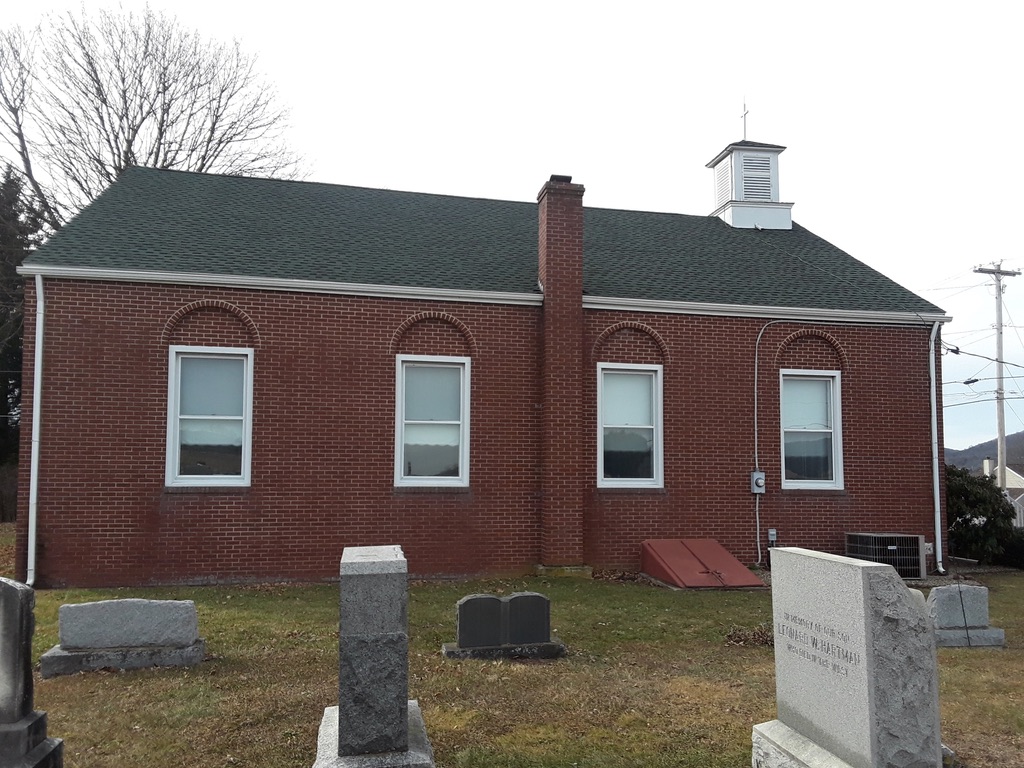
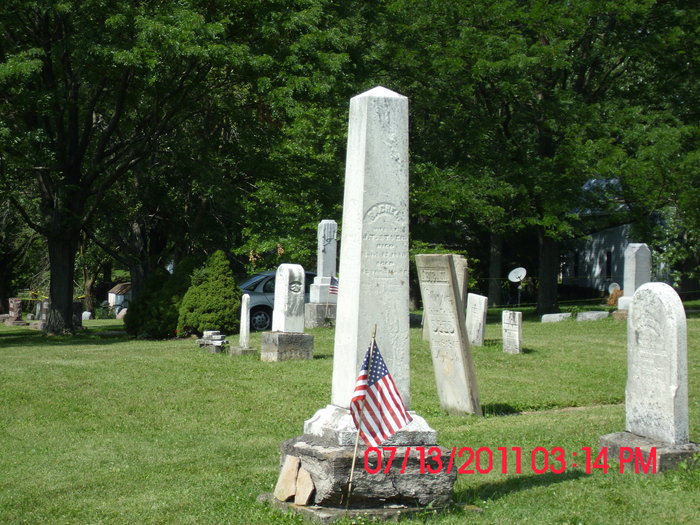
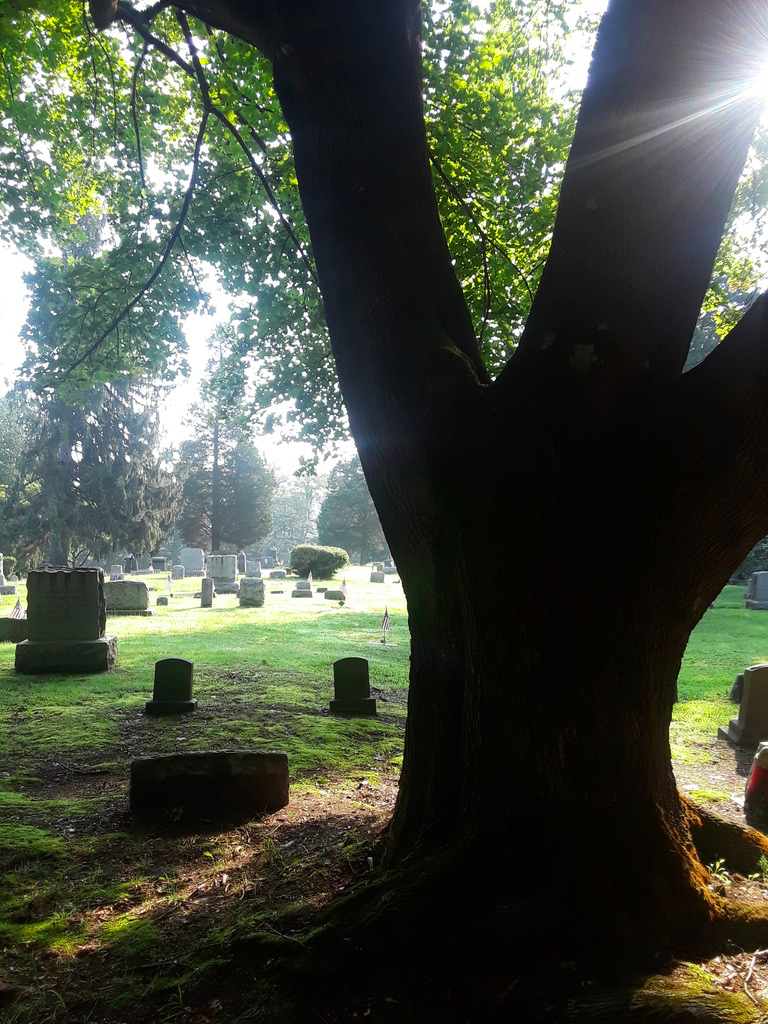
Dutch Hill (Emanuel Reformed) Church, resting place of Alexander and Harriet (Wintersteen) Carr

The Wintersteen Family:

Like the Bruglers, the Wintersteens were among the many New Jersey families who moved west to Pennsylvania in the late 18th and early 19th centuries. Harriet Wintersteen was the daughter of Henry Wintersteen (1798-1866)  and Lydia Ebner (1810-1886) (sometimes spelled “Ebnerin”; adding “in” or “ine” as a suffix to the end of a female’s last name was common in old German families). Lydia’s parents were from the Lehigh Valley and are buried at Strawberry Ridge. Henry’s first wife was Mary Gingles of the Jerseytown area. At different times, Henry Wintersteen served as a Democrat in all the elected offices for Valley Township as well as serving in Danville’s militia cavalry unit. Henry was also an active member of Straub’s Lutheran Church, where he and his wife are buried. Henry Wintersteen and his wives had ten children including Harriet, who married Alexander Carr.
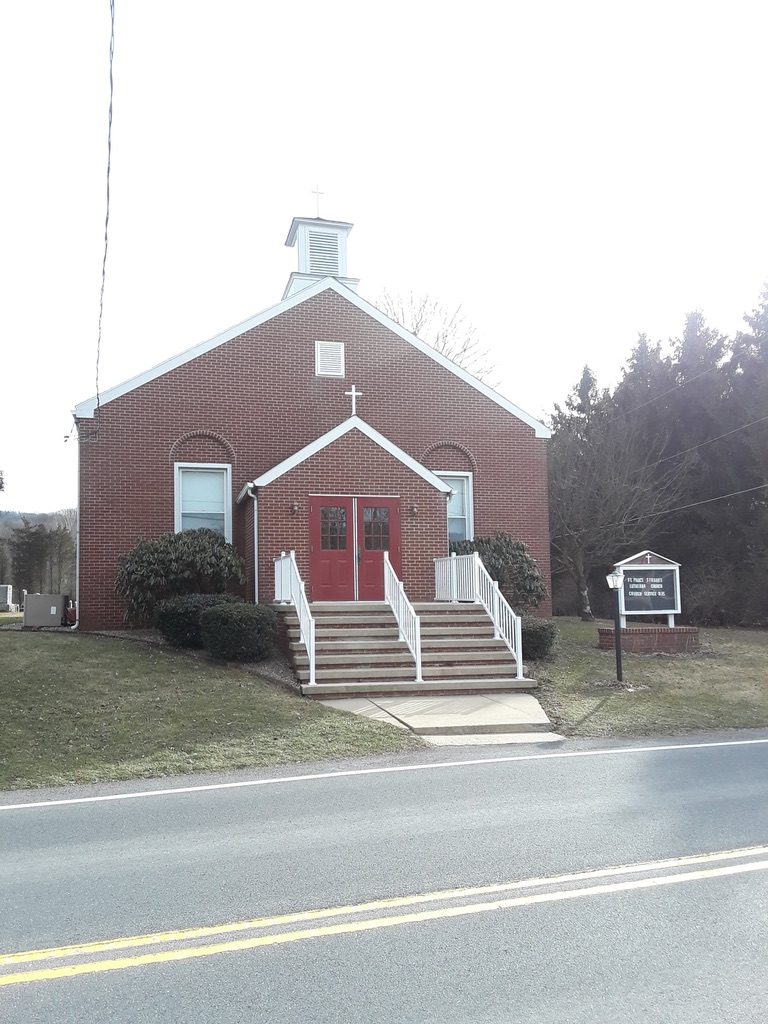
Straub Lutheran Church outside Kaseville, final resting place of many Crossleys and Wintersteens

Alexander and Harriet Carr had six children. They included:

  1. Lydia Carr: b. 11/9/1856
  2. Henry James Carr: 5/7/1858-11/26/1916
  3. Daniel W. Carr: b. 11/19/1860
  4. Mary Catherine Carr: 5/2/1867-7/31-1936
  5. Sara Ida Carr: b. 3/26/1867
  6. Harriet Iantha Carr: b. 9/5/1875

Stories about Mary and Frank Crossley:

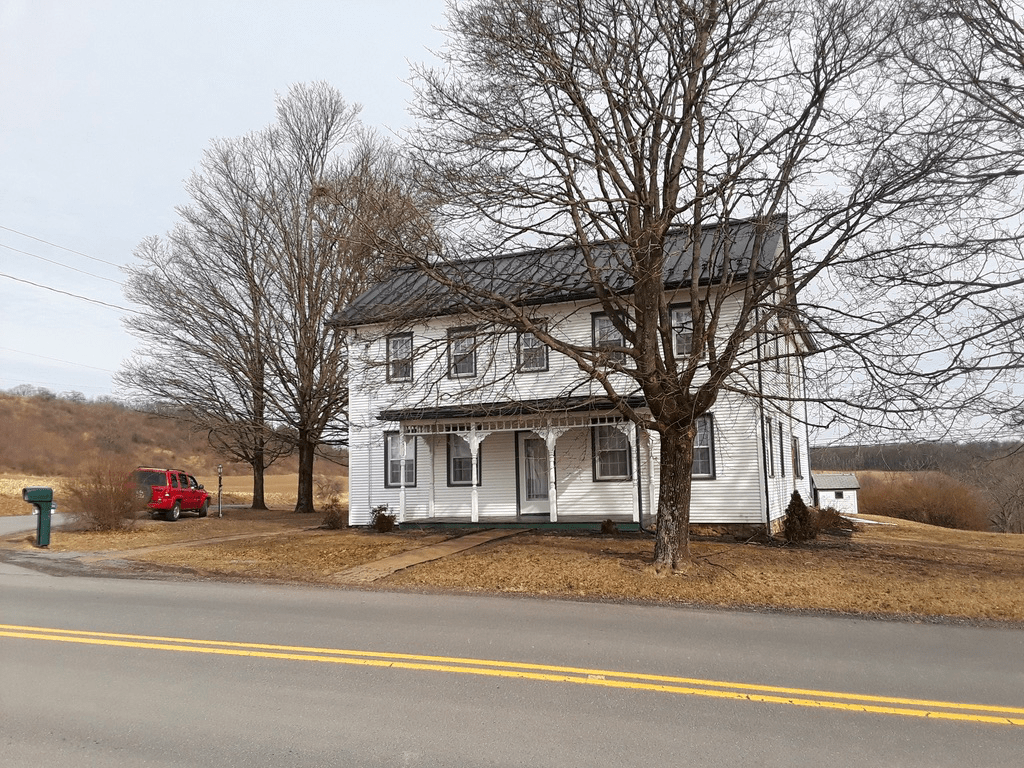
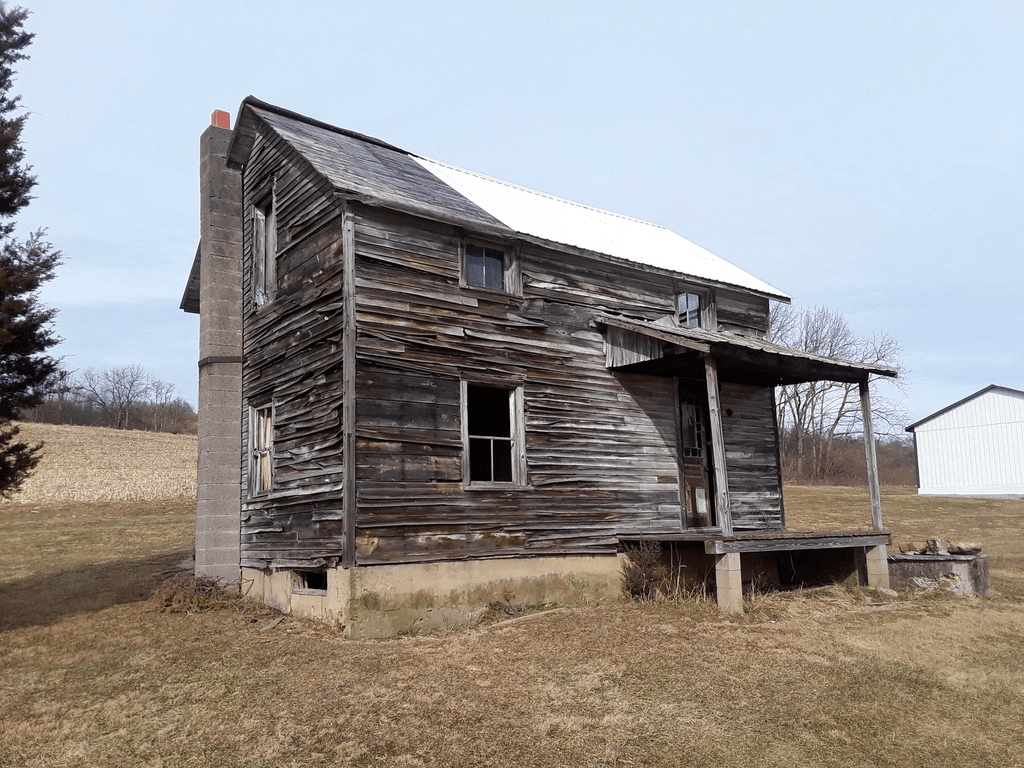
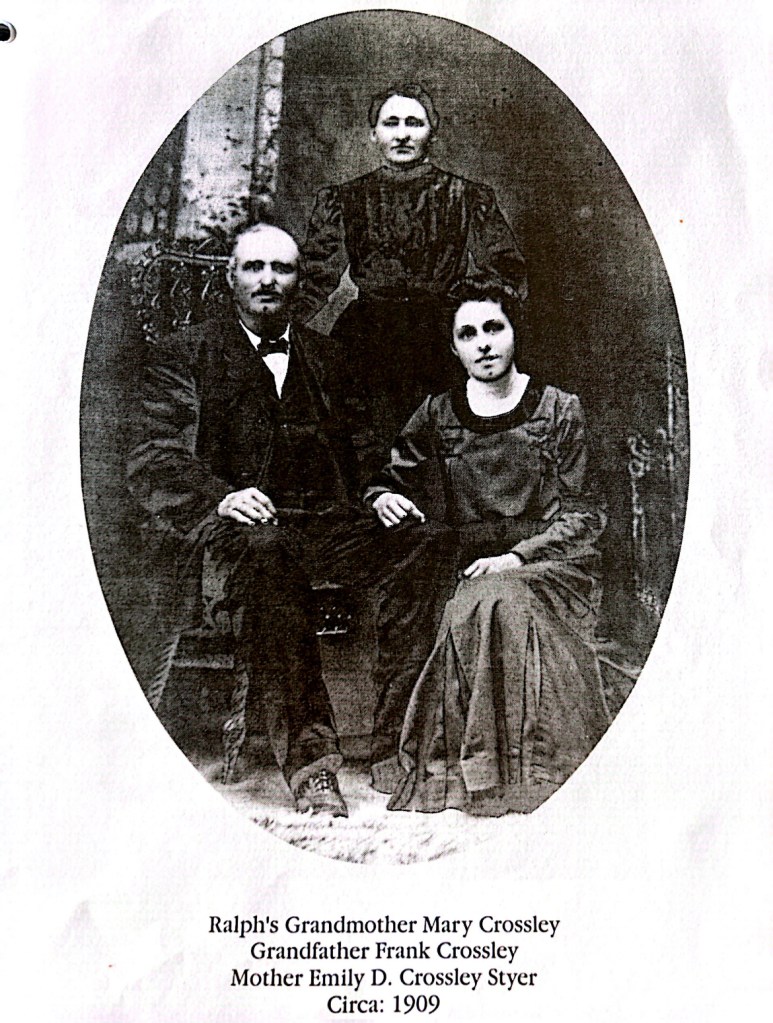
Mary Catherine Carr married J. Franklin Crossley 1/8/1891. They lived on the farm along Columbia Hill Road which later became the Leonard and Mary Styer farm. One of the more interesting details of Frank Crossley’s life was that as an older man, he had a peg leg. There are many versions of the story about how he lost his leg, but I heard that he was a diabetic- and one day he clipped a toenail too deeply, and the wound developed gangrene. His leg was amputated at the knee. The peg leg has been passed down through the family to this day.

Grandpa Frank’s prosthetic leg made farming impossible, so he and Catherine moved in with their daughter and son-in-law, Emily and Charles Styer in Liberty Township. Kay Heim told me that though disabled, Frank Crossley insisted in “doing his part” to not be a burden the family- so he cut firewood every day for the stove and would drive the wagon during harvest season.

Edna (Lazarus) Styer, remembered that before marrying her future husband, Ralph Styer (oldest of the 12 children of Charles and Emily), Grandmother Mary Crossley sent her an unusually formal invitation in the mail asking her to attend Thanksgiving dinner with the family. The more senior of the 12 Styer children would have remembered Grandmother Catherine living with them until her death in 1936.

Many day-to-day details of the lives of Frank and Mary Crossley can be read about in the 1913 diary of their daughter, Emily. For instance, we know that Grandpa Frank must have been a cat lover, because the diary records that one day he stopped mowing hay to save one of Emily’s kittens which had become stuck in a tree.
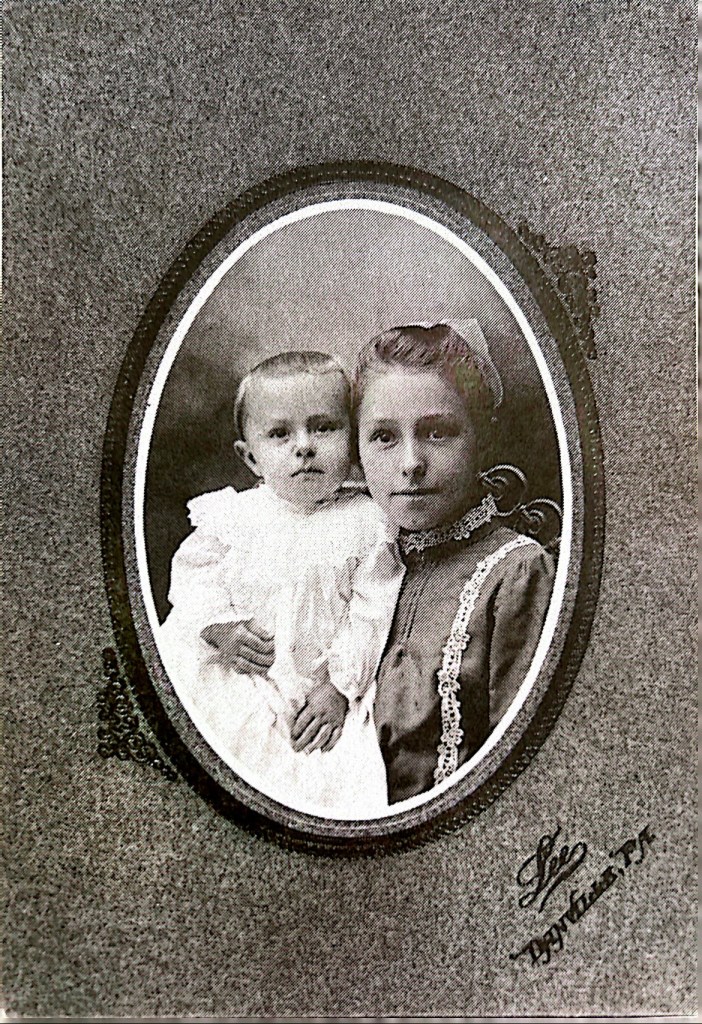
Glenn and Emily Crossley

Frank and Mary Crossley had only two children, Emily Dorothea Crossley, our grandmother (born 1893), and Glenn, who died aged 6 in 1902 of tubercular meningitis. He is buried, along with his parents, Frank and Mary at Straub’s Lutheran cemetery. After this, Emily continued on as an only child, playing and doing chores around the farm on Columbia Hill Road. During her teenage years, she became interested in one of the neighbor boys, Charles Styer, who lived a short carriage ride up Columbia Hill, but we will save that story for the next article.
Styer Stories Episode 13: The Crossley Connection Part 3:

The Friendly Wilson’s: Reuben and Martha (Wilson) Crossley

In our last episode we explored the lives of Joseph and Catherine (Heimbach) Crossley, which covered the Crossley family’s move from Lizard Creek to what was then Columbia but is now Valley Township, Montour County. Joseph and Catherine had several children, one of whom, Reuben, married Martha Wilson, descendent of an English Quaker family who also lived in Valley Township at the time.

The story of the Wilson clan begins in England. According to the Crossley Geneology compiled by Harold Crossley and given to Mary (Wife of Leonard) Styer, the first Wilson ancestor was named John Wilson. He was first married to Sarah Smith who died in England after giving birth to a daughter, Mary. John married again, this time to Phoebe Dawson, with whom he came to America. This marriage produced seven more children:

  1. Mary (b. 1756); married Reuben Moore in 1785. Unclear if they came to Pennsylvania.
  2. Ann (1759-1760) buried in England, born to John’s first wife, Sarah Smith.
  3. Hannah (1763-1856) married Phillip Opp (1759-1838) of Muncy in 1787. It is through this family we are related to Civil War veteran, Milton Opp who was killed during the Battle of the Wilderness. They are probably buried at the Muncy Cemetery. Hannah was born in England before the family came to the Pennsylvania. Our grandmother, Martha S.  Wilson (Wife of Reuben Crossley) remembered stories that Hannah would run sacks of grain from the Frosty Valley farm clear to Northumberland to the gristmill on horseback until her younger brother was old enough. One time, when they ran out of grain, the miller provided bread for the family so they didn’t starve.
  4. Rachel (b. 1765 in Pottstown) married Thomas Eves (1755-1845). They are buried at Millville Friends’ Cemetery. Note on Quaker burial record says “a minister” which is not impossible, because Quakers allowed women to be preachers long before other Christian denominations. According to a newspaper clipping, Thomas and Rachel travelled all the way to the Maiden Creek Meeting in Berks County to get married.
  5. John (1767-1768) died in infancy near Philadelphia.
  6. Sarah (1769-1794) married Daniel Frazier in 1793, but died young.
  7. Thomas (1771-1846) married Susanna Russell (1781-1857)
  8. John (1774-1849) married Mary Thomas. Buried in Montour county.
  9. Phoebe (1780-1869) married Judge Thomas Taggart (1777-1864) of Lycoming County in 1801. Buried in Muncy Cemetery.  Taggart was an associate judge in Lycoming County and served in the Pennsylvania Assembly.
The Grave marker of Phoebe Wilson and the Honorable Thomas Taggart, Muncy Cemetery. Photo taken from Findagrave.com: https://www.findagrave.com/memorial/64984686/phoebe-taggart

If you look over the notes I wrote about each child, you can see that the Wilson’s must have come to Pennsylvania between 1763 and 1765. They probably spent some time in “The Quaker City” (Philadelphia) before the moved to Pottstown long enough to have Rachel, and eventually ended up in Montour County, after the Revolutionary War, according to an 1892 newspaper clipping. This clipping states that John Wilson was a “Fine Latin scholar and taught school (Yet another schoolteacher in our heritage).”

Once settled in Valley Township, Montour County, the Wilson’s built a home and began farming 283 acres of land (then all forest), in the Frosty Valley. The family attended “meeting” (church) every “First Day” (Sunday) at the Millville Friends’ Meeting.

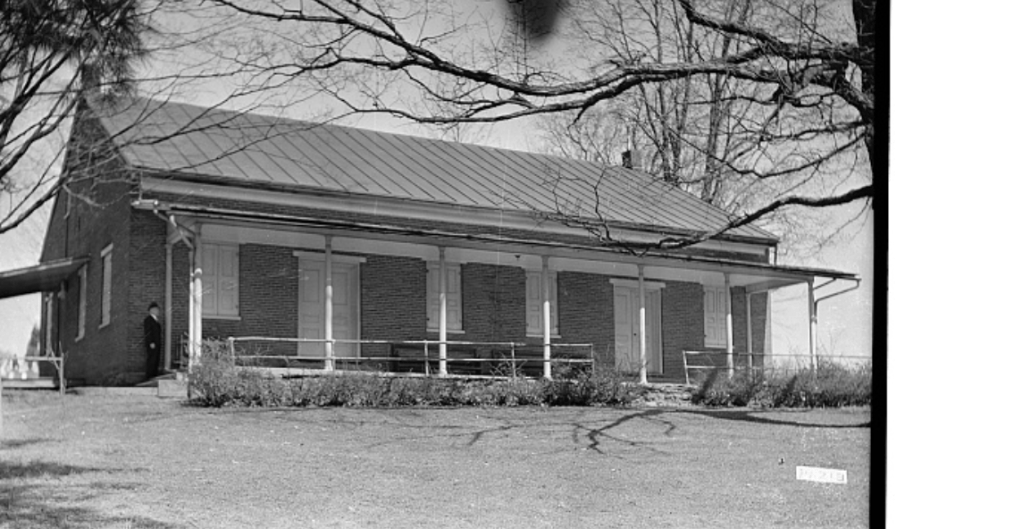
Millville Friends Meetinghouse: From: https://www.loc.gov/resource/hhh.pa0360.photos

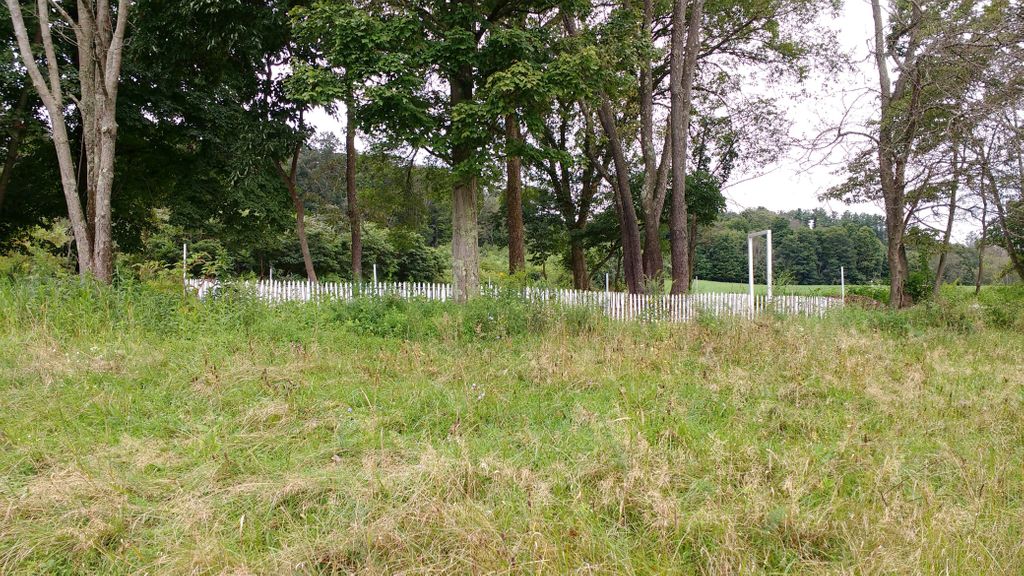
Where were John and Phoebe buried? Good question. Their graves are lost, but we can make a pretty good guess. Some families, far from their church congregations, created small graveyards on their property. The Wilson family did just that. Its graveyard lies along Kaseville Road between Kaseville itself and the Straub Lutheran Church, in a hedgerow. Once upon a time it was overgrown and hard to access, but now, you can basically see it from the road and it is maintained very nicely by the present landlord. Some graves there are legible, some are not. The 1892 newspaper clipping said that John and Phoebe are buried there among their descendants.

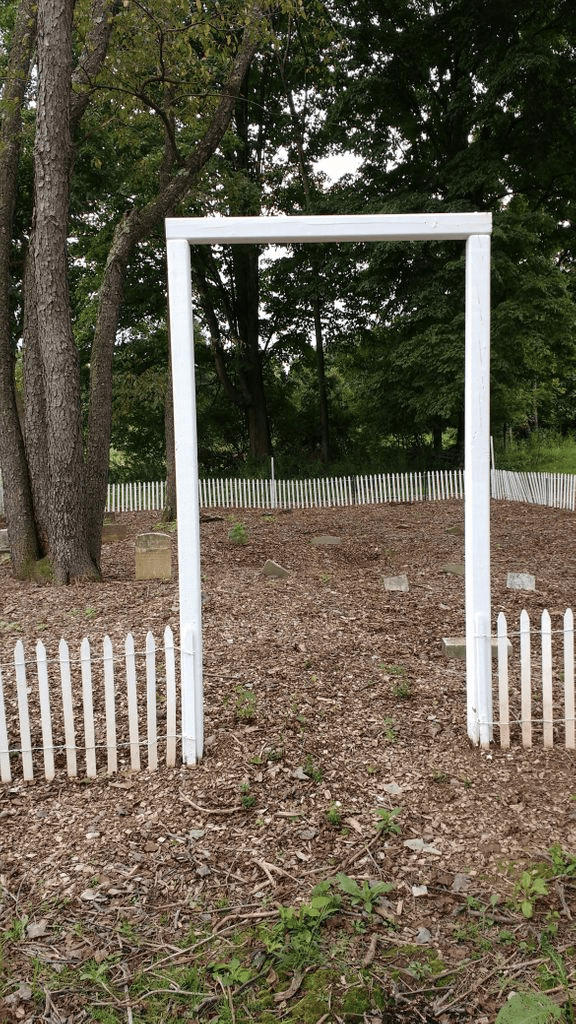
The entrance to the newly mulched and cleared Wilson Cemetery near Kaseville. From: https://www.findagrave.com/cemetery/46654/wilson-cemetery

Our direct ancestor from the union of John and Phoebe is Thomas and Susannah (Russel) Wilson. According to the Harold Crossley genealogy book, Susannah was left as an infant on the doorstep of a “Hames” family, where she grew up. However,I was unable to find any Hames’ on Findagrave before 1822 and noticed that she and Thomas named one of their sons “Reuben Haines” Wilson.  The Reuben Haines family was a well-connected “Blue Blood” Philadelphia family. One of their homes, “Wyck,” built around 1690, is now a museum on Germantown Avenue in Philadelphia. I can’t come to any firm conclusion, but it seems that the Haines family must have had some connection with Susannah, perhaps even raising her in their home. This connection is tenuous at best until further research is done.

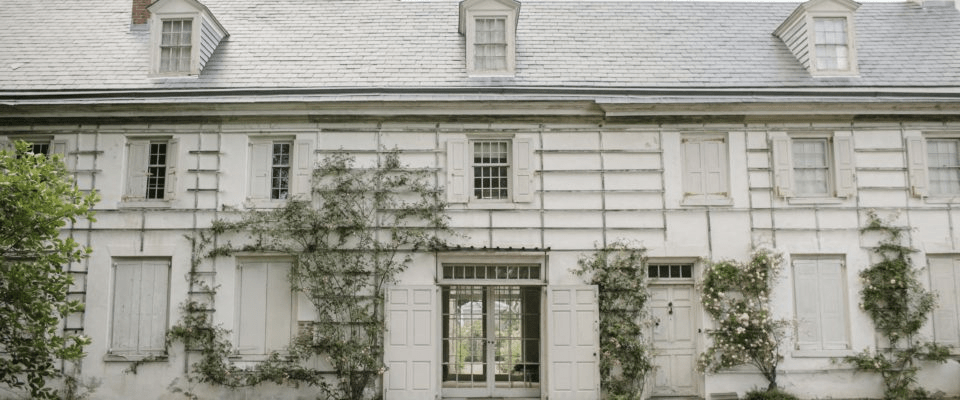
The Wyck House, one of the houses owned by the Reuben Haines family in Germantown Pennsylvania. Now a museum with a nationally renowned rose garden. Did Susannah Russel grow up here? From: https://wyck.org/house/

Susannah and Thomas were married at the Millville Friends’ Meeting in 1802 and had the following children:

  1. William P. Wilson
  2. John Wilson (1804-1865) married Francis Maus and had 11 children
  3. Reuben Haines Wilson (1806-1892) married Sarah Eves. They had 7 Children. In his obituary it was noted that Reuben was known as the last member at Millville Friends to wear plain-style clothing and broad hat (long before the Amish, the Quakers were famous for their plain clothing).
  4. Elizabeth D. (1807-1871) married John Hugh Willits
  5. Priscilla (1810-1869) Married Benjamin Eves.
  6. Thomas Wilson Jr. (1812-1843); unmarried
  7. Mary M. (1816-1876) married Isaac Green Pursel. After the death of Mary, Isaac married her sister (and our grandmother) Martha, recently widowed by our grandfather, Reuben Crossley.
  8. Rachel S. (1820-1885) married Frances Eves.
  9. Martha S. (1826-1903) married Reuben Crossley (1823-1876). As noted above, she remarried her widowed brother-in-law after Reuben C. died.
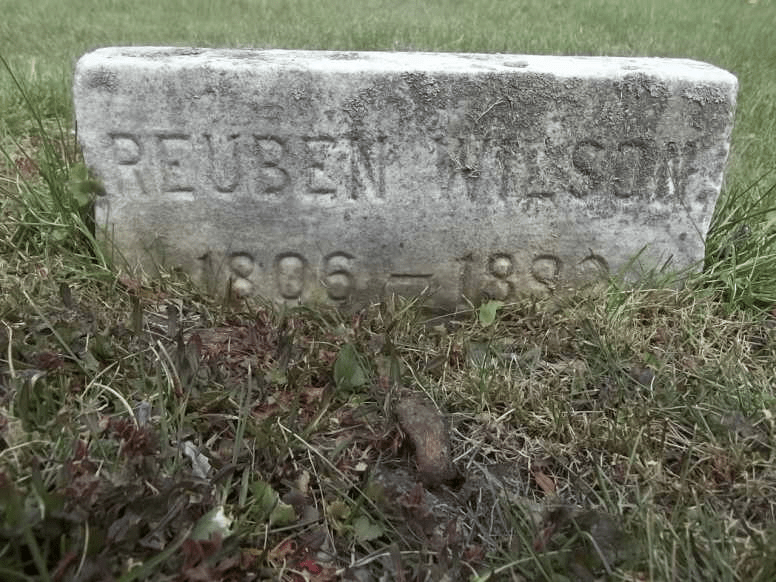
The gravestone of Reuben Haines Wilson at Millville Friends is typical of Quaker graves . They are always very plain and when they have more room for inscription, usually don’t use month names because of thier connection to paganism, so March, the month of Mars becomes 3rd Month. Days of the week are treated the same way. Thor’s Day (Thursday) becomes 5th Day. Photo taken from Ancestry thanks to Ramona Lowe McVicker.

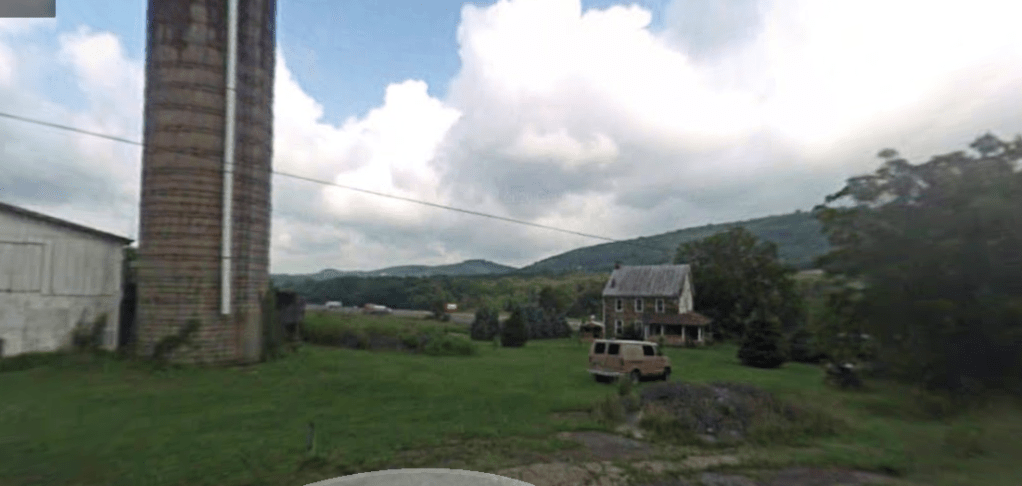
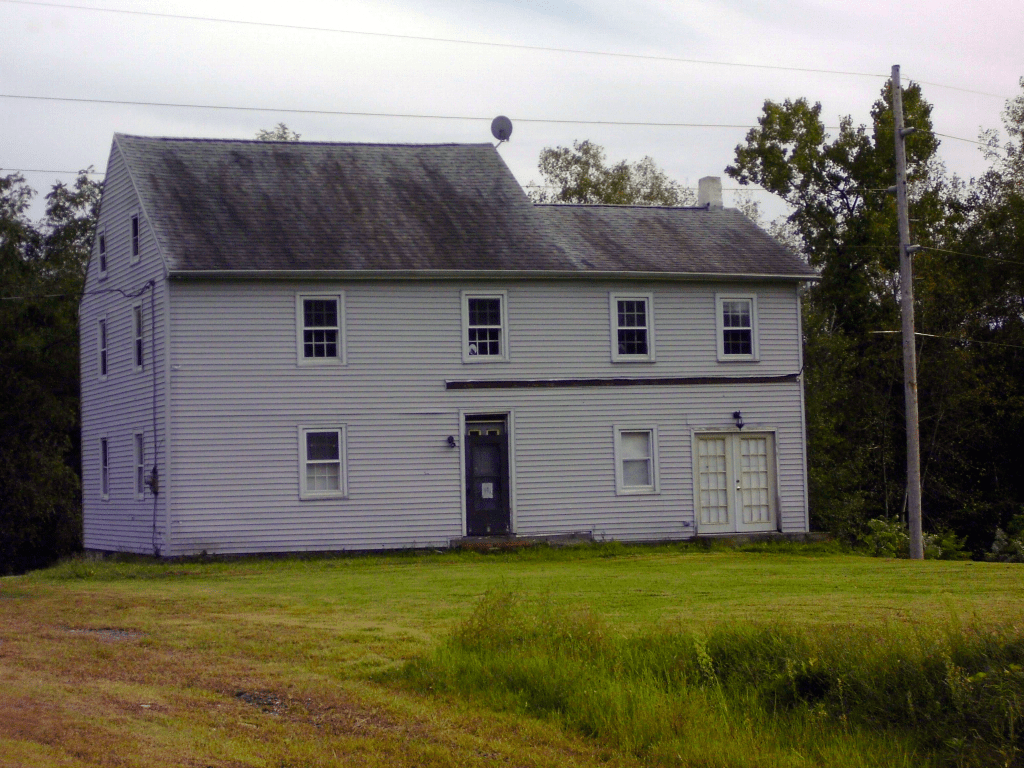
Susannah and Thomas rebuilt the original Wilson home in 1822, which still stands today near where Columbia Hill Road crosses Route 80 (on the southwest corner of this intersection). The barn looks much newer than the home. The 1892 newspaper clipping told of a 200 person Wilson family reunion at this home, then owned by the Maus family. Susannah and Thomas are likely buried in the Wilson Family Plot.

I apologize for using a Google Street View screen shot, but I don’t have access to any photos of the place. This is the 1822 Wilson House on Columbia Hill Road. I’ve heard there was an addition which has since been removed, making the house closer to its original size. It’s a lovely stone house, but is located right next to Route 80. It would be neat to get down there to get photos and maybe even take a look inside someday.

Reuben was a farmer in Valley Township. Martha and Reuban Crossley are buried at Straub’s Lutheran Church. They had the following children:

  1. Emily Jane (1845-1898) married Samuel Pursel (Brother of James and nephew of Isaac G.)
  2. Matilda (1852-1903) married James Pursel (Brother of Sam and nephew of Isaac G.)
  3. Robert Crossley (1854-1905) married Sarah Catherine Benfield
  4. Wellington Crossley (1857-1926) married Mary Elizabeth Weaver
  5. John Franklin Crossley (1861-1928) married Mary Catherine Carr (1864-1936)

Next time on Styer Stories we will investigate J. Frank and Mary Catherine Crossley, parents of Emily (Crossley) Styer who married Charles Styer and created the family to which we belong!

Styer Stories Episode 12: The Crossley Connection Part 2

From Lizard Creek To the Susquehanna Valley: Joseph and Catherine (Heimbach) Crossley

After the turmoil of the Revolution was ended, George and Rachel (Thomas) Crossley settled into improving the 193 acre portion of the property confiscated from the Loyalist Thomas family. In 1787, the same year that the U.S. Constitution was completed, they welcomed their fourth child, Joseph, into the world. Census records indicate that the Crossley’s remained in the Lizard Creek vicinity until at least 1800. It is unclear as to where George and Rachel Crossley are Buried. Graves can be lost for several reasons, one being that some people were buried in small family cemeteries on their farms and are subsequently lost as the generations wear on. Another reason is that gravestones at traditional church cemeteries can break, weather beyond legibility, or even sink into the ground completely out of sight. The final resting place of George and Rachel remains a mystery.[1]

At some point in the early nineteenth century, the Crossley family with their sons, Joseph and his brothers James and Ezekiel made their way to the Montour/Columbia County area, where they settled on the southern slopes of the ridge to the north of the current route 80.[2]  Ezekiel moved on and ended up settling in the east Lycoming County area near Sullivan County. Joseph and James continued farming in Valley Township. Besides farming, Joseph and James became plasterers and masons. According to the Biographical Annals, Joseph helped build the stone mill for Phillip Maus near what is now Mausdale.

The Phillip Maus Mill, near what is now Mausdale, was built, in part, by our grandfather Joseph Crossley. The complex once stood on the same side of the Road and a little north of the Iron Mill Church on Route 54 (Formerly Mausdale German Reformed). The Mill burned in 1924 and the House was demolished when they made route 54 bigger in the 1960s. Source: https://scontent-iad3-2.xx.fbcdn.net/v/t39.30808-6/287525025_5103250999730184_5341339549925201274_n.jpg?_nc_cat=104&ccb=1-7&_nc_sid=730e14&_nc_ohc=AHAg5er9DL4AX8bQ0N8&_nc_ht=scontent-iad3-2.xx&oh=00_AT_d5nrRZt35ScTbP_CNlijCnn3i-ZsrE8-l9WCFVQNOGw&oe=62D566C3

Our uncle James Crossley, Joseph’s brother, also appears to have farmed and been a stone mason. He was born in 1779 and died in 1830. He is buried beneath a beautiful slate tombstone in Columbia Hill Cemetery. According to the blurb on Findagrave, he was married to Christianna Sidler and had the following children: Joseph, George, James, John, Mary, William Thomas, Maria Catherine, Rachel, Sarah Jane, Charles P., Elizabeth, David, and Hannah.”

The photo of James Crossley’s tombstone was too good not to share. It’s amazing how well some of the old slate stones weather. If you see something familiar, you will notice a marked similarity between this stone and that of John Lutsey in Newport Township, Luzerne County. It seems to have been a popular design along the North Branch between 1820 and 1830. James and many of his descendants were buried in the Columbia Hill Cemetery. It is likely James passed away about the same time the Columbia Hill Church was built.

Joseph lived in a homestead which may no longer exist somewhere in the vicinity of Trump Road between Columbia Hill Road and 642. It is also possible that the farm still stands if it is the same one his son Reuben owned in the Cummings map of Columbia and Montour Counties published in 1860. If that is the case, then the original homestead is probably the farm right next to where Kase Run flows under Route 80. Their lane is bisected by the “Short Way.”  

Joseph Crossley (1787-1863) married Catherine Heimbach (1791-1858) and had the following children:

  1. Joseph H. Crossley, moved to St. Joseph’s County Michigan
  2. Catherine, married a Koup
  3. Elizabeth, married Joshua Stettler
  4. Peter Crossley (1819-1892), married Mary Mausteller
  5. Margaret, married George Budman and moved to Michigan
  6. Rachel, married a Rishel
  7. Reuban Crossley (1823-1876) married Martha Wilson (1826-1903)
  8. Benjamin, married Martha Schultz, moved to Michigan
  9. Mary, married (1827-1905), married John Faux
  10. Harriet, married Benjamin Kramer
  11. Thomas Crossley (1830-1908) Married Harriet Lazarus (Who was one of Edna Styer’s great aunts)
  12. Jane (1836-1906), married Andrew Emmet
Straub’s Lutheran Church in Kasevelle, PA, is the final resting place of many members of the Joseph and Catherine Heimbach Family.
Source: https://www.findagrave.com/memorial/74198311/joseph-thomas-crossley
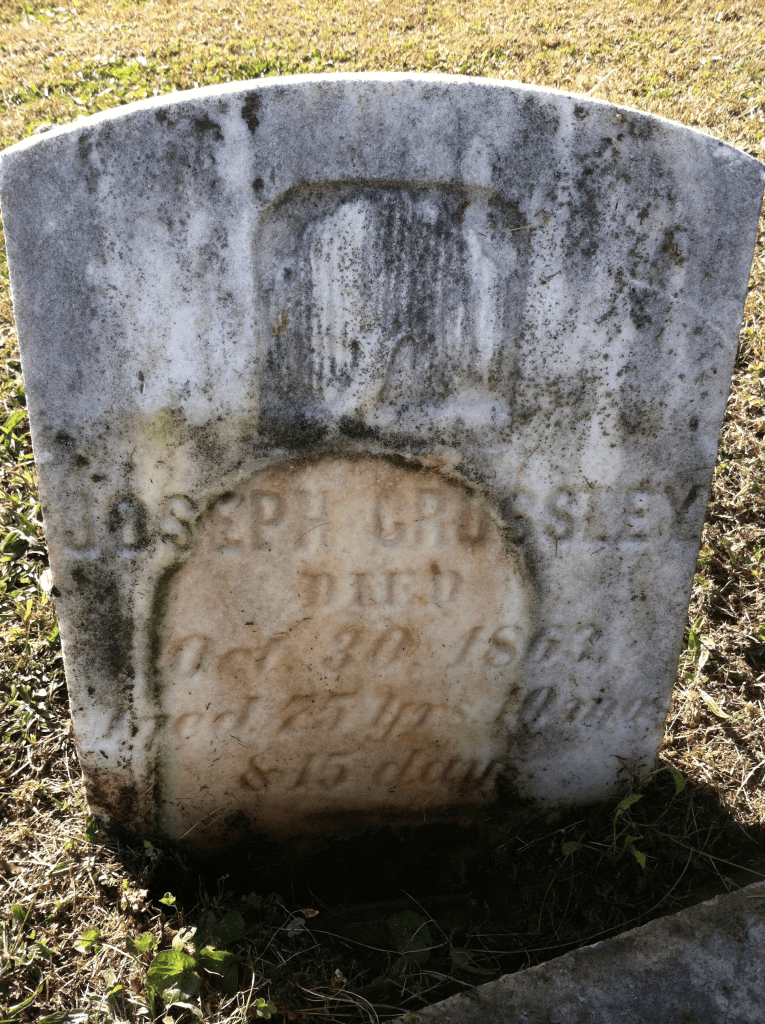
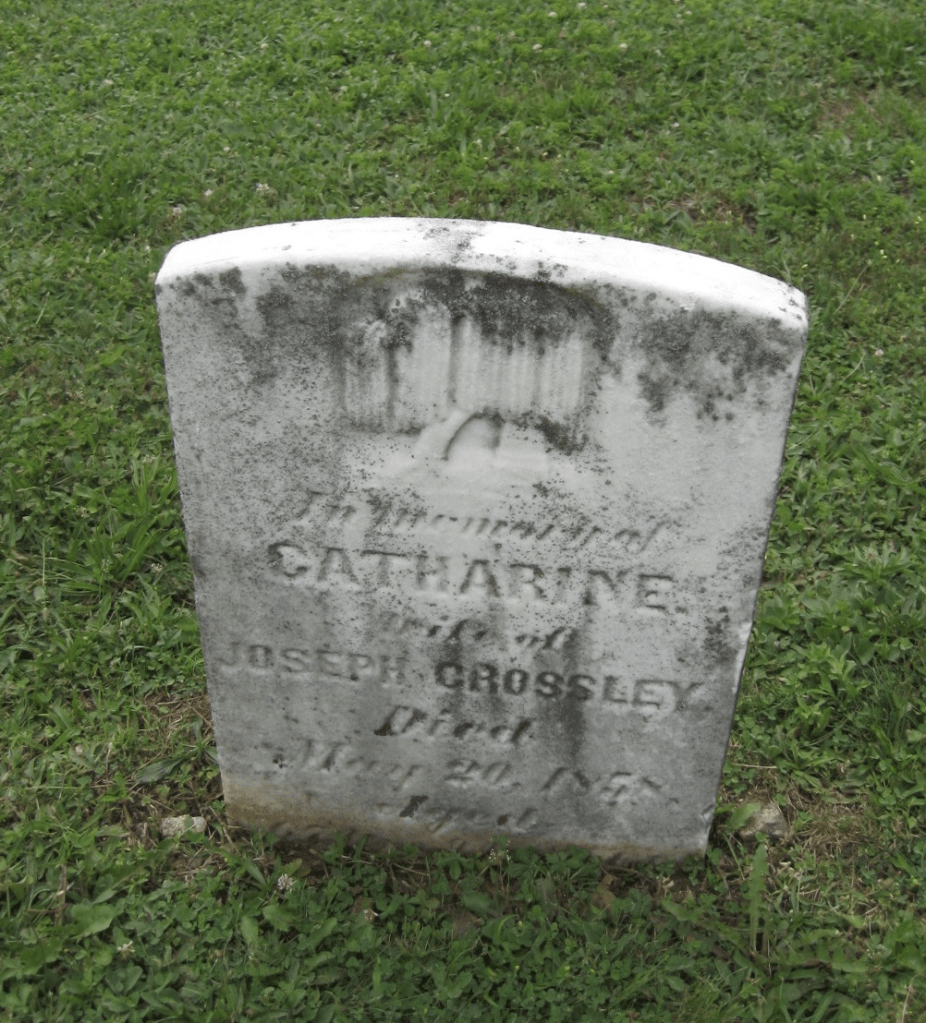
Source: https://www.findagrave.com/memorial/74198341/catharine-crossley

Joseph and Catherine are buried with many other members of the Crossley clan in Straub’s Lutheran Cemetery in Kaseville.

Next time on “Meet the Family” We will move to Reuben Crossley and his wife Martha Wilson, where we will discover a stone farmhouse and more Quaker heritage!


[1] What makes all of this worse and even more confusing is that the Biographical Annals of Columbia and Montour County claims that Joseph and his brothers George and James, were the son of a John Crossley, a brother of George Crossley, who both came to the Danville area together. Dani Crossley’s work asserts that Joseph, James, and George (moved to Ohio) were the sons of George Crossley and Rachel Thomas. The BA of C&MC and works like it have been known to rely entirely on memories and oral histories and not necessarily on records, so I am going with Dani Crossley’s research on this one.

[2] Again, records get sketchy. George and Rachel (Thomas) Crossley’s graves are lost to us. They may have lived the rest of their lives in Lizard Creek. However, the Historical and Biographical Annals of Columbia and Montour Counties says one of the earliest settlers of West Hemlock Township was George Crossley whose family had since left the area. Rather than George Sr., we may look to George Jr. as this historical figure. Dani Crossley’s book mentions that George Crossley Jr. died in Hancock County, Ohio, so it is likely that he moved to Montour County before the rest of his brothers.

Meet the Family: Episode 11- The Crossley Connection Part 1

Last time we examined the roots of the Styer family, we studied Cyrus and Harriet Brugler Styer. Their youngest son, Charles, married Emily Crossley in 1913. The Crossley genealogy is not well documented among current Styer family records to which I have access, but a providential meeting a few summers ago opened new doors to understanding this part of our heritage.

Louise (Crossley) Nogle has been picking blueberries at the Ralph Styer (Now Green Barn) Berry farm for many years. After discussions with the family, it had been discovered that her maiden name was Crossley and that she must be somehow related to the Styer’s. One summer when I was working at the farm, she lent me a 2006 hardbound Crossley genealogy by Dani Crossley entitled Speak to Me, Ezekiel. This source delves much deeper into the Crossley story than the traditional Styer family sources I have at my disposal, and the findings are a tremendous addition to our shared knowledge.

The Thomas Connection

Our story begins with the Welsh family of Evan (1660-~1710) and Margaret Thomas who were early settlers of the colony of Pennsylvania. They made their home in Bucks County, PA, where they had at least three sons, the third of which was Richard Thomas (1715-177?). Richard married Elizabeth Walton at the Abingdon Friends Meeting House in 1736. They had at least seven children, the second of which was William Thomas (b. 1737). William wed Mary Rhodes around the year 1756 and moved to Northampton County, PA. William and Mary Thomas had a daughter, Rachel, who married George Crossley sometime before 1777.

We descendants of Emily Crossley Styer can claim Welsh heritage through the Thomas family. Welsh flag image taken from: https://en.wikipedia.org/wiki/Flag_of_Wales#/media/File:Flag_of_Wales.svg
The Abingdon Friend’s Meeting just north of Philadelphia in Montgomery County, PA, where our ancestor Richard Thomas married Elizabeth Walton in 1736. Photo taken from: https://upload.wikimedia.org/wikipedia/commons/thumb/6/66/Abington_Friends_Meeting_House_MontCo_PA_Planning.jpg/1024px-Abington_Friends_Meeting_House_MontCo_PA_Planning.jpg

Family life for the Crossley’s and Thomas’ was complicated significantly by the brutal and divisive politics which divided the nation during the years of the American Revolution. The consequences of the divisions between Patriots and Loyalists make today’s political divisions look tame, and even the divisions of the Civil War years can seem pale in comparison to the divide between Loyalists (or Tories, as they were called) and Patriots. 

This study of the Styer genealogy has turned up Revolutionary Patriots (in the form of families like the Spares, or as we are about to see, the Crossleys), Mennonite conscientious objectors (like the Styers), and even a rogue Hessian deserter-turned-Patriot (i.e. John Lutsey). In today’s post it will become clear that we have Tories in our ancestry as well- in the form of the Thomas family.

Lizard Creek, the Crossley’s, and the War Years

Just before the onset of the American Revolution, the Thomas family had moved from the Hilltown area of Bucks County to the Lizard Creek region which today in West Penn township Schuylkill County and East Penn Township Carbon County. All of the following events took place when this region was still part of Northampton County.

After the move to Lizard Creek, Rachel Thomas married George Crossley, a neighbor of likely Pennsylvania German heritage. The exact immigrant origins of the Crossley’s (or Krassel’s as early documents show them) are unclear. The two probably had no idea about the political cataclysm that was about to take place as the 13 colonies left the British Empire.

Partisan rancor in the Lizard Creek region steadily increased through the early 1770’s until It all came to a head after the defeat of Washington’s army in the 1776 campaign around New York City. As the Continental cause looked doomed and Washington’s army retreated through New Jersey and into Pennsylvania, Loyalist elements began to organize a resistance movement in support of the King. Local Patriots organized and broke up a meeting of Loyalists on December 23, 1776.[1] Dani Crossley’s “Speak to Me, Ezekiel” (the Crossley genealogy included in PDF form below) makes the claim that this meeting may have included William Thomas and some of his relatives.  Unfortunately for these Loyalists, a week later General Washington would lead the Continental Army in a crushing victory over Hessian soldiers at Trenton and later a British force at Princeton, ending the threat of Loyalist insurrection in the Lizard Creek region.

A depiction of a tory (Loyalist) soldier in the Queen’s Rangers, who fought against Patriot forces during the American Revolution. Image taken from: https://preview.redd.it/adjdq48inf241.jpg?width=640&crop=smart&auto=webp&s=b977fd1b1f62ba0fa173b756f9de6d2916d76725

 In the year 1778, When the British took the city of Philadelphia, William Thomas escaped there to join them and became a captain in a Loyalist unit. His brother, Joshua, also defected at some point and spent some time enlisted in the Queens’ Rangers, a famed Loyalist regiment. Both men lost everything they owned. Their land, homes, and possessions were all confiscated by the state and sold (All by a bill of attainder, which is now unconstitutional). William and Joshua Thomas were among the tens of thousands of Loyalists forced to flee the young United States to the eastern provinces of Canada after the war. The two resettled in New Brunswick and Nova Scotia, respectively, as defeated and destitute men.[2]

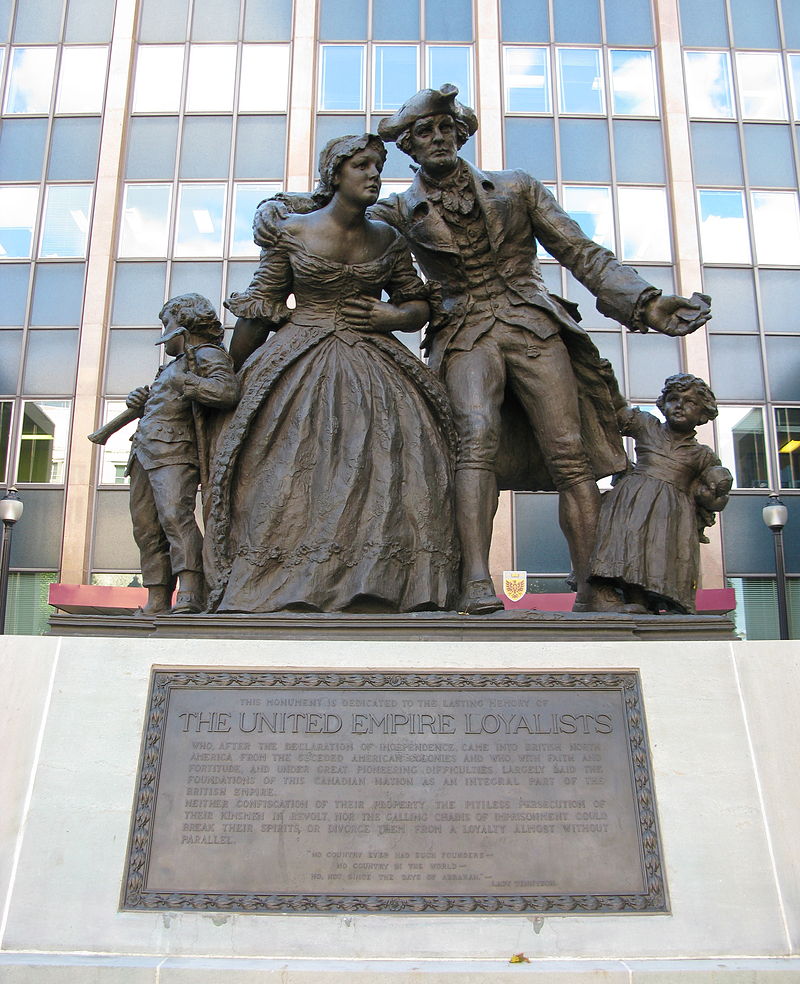
A monument in Canada to the United Empire Loyalists, the name for colonial Tories forced to flee the young United States at the end of the American War of Independence. Image from: https://upload.wikimedia.org/wikipedia/commons/a/a9/United_Empire_Loyalist_statue_and_plaque_in_Hamilton%2C_Ontario.jpg

There is a twist in this story that shines a light into the family politics of the Thomas/Crossley clan. William’s son-in-law, George Crossley (and his daughter, Rachel) acquired nearly 200 acres of William Thomas’ confiscated estate near Lizard Creek, where they lived at least until the first decade of the nineteenth century. William’s loss was to George and Rachel’s benefit; one can assume this represented a sad pattern seen across the colonies.

The details are somewhat hazy, but according to Dani Crossley, it appears that George and Rachel (Thomas) Crossley had the following children:

  1. Reuben (1777-1837); moved to Vigo County, Indiana and married Anna ?
  2. James (1779-1830); lived around Danville, married Christianna Sidler, and is buried at Columbia Hill.
  3. George (1784-1860); moved to Hancock, Ohio and married Mariah Mary Mahan
  4. Joseph (1787-1863) married Catherine Heimbach and is buried at Straub’s Lutheran.
  5. Daughter 1 (b. before 1790)
  6. Daughter 2 (b. before 1790)
  7. John (d. 1843) moved to Hamilton County, Indiana and married Maria Moser.
  8. Jacob (b. 1794)
  9. Daughter 3 (born before 1800)
  10. Daughter 4 (born before 1800)
  11. Ezekiel (before 1800-before 1880)

As a matter of interest: family sources are conflicting as to the immigrant origins of the Crossley branch of the family. One source I have claims the Crossley’s were English, but examination of records show that the name originally may have been something like Krassel. This, combined with the fact that many are buried at Lutheran cemeteries, points to Pennsylvania German origins of the family.

Next time on Styer Stories we will discuss the Crossley family in Columbia and Montour County, specifically the family of Joseph and Catherine (Heimbach) Crossley.

Source: Speak to Me, Ezekiel! The Crossley’s of Columbia and Montour Counties by Dani Crossley, 2006.


[1] Bodle, Wayne, Valley Forge Winter, 2010, Penn State Press, Page 19.

[2] According to colonial records, both men were entirely without money in the years after the war.

Meet the Family: Episode 10- Cyrus Fairchild and Harriet Brugler Styer

On September 23, 1873, Cyrus Fairchild Styer (1843-1920), son of Cornelius and Roseanna Styer married Harriet “Hattie” Brugler (1845-1914), whose parents were Samuel and Jane Brugler. Both were born close to the Columbia Hill Road, Harriet at the stone Brugler House and Cyrus at the old Styer homestead, the Clover Hill Farm. Both the Bruglers and Styers were members of the Presbyterian congregation at Columbia Hill and probably met each other there among other social functions.

Education and military service

Cornelius T. Styer had established the Styer School, where Cyrus attended grade school. He furthered his education at the Millville Academy which was like a high school. Harriet Brugler likely attended school in Hemlock Township, Columbia County, where she grew up. After finishing his education, Cyrus taught school for eight years working in the White Hall school in Madison Township, the Bright School in Valley township, and the Styer School near the family homestead.

The old Styer Schoolhouse, where Cyrus attended during his early years. As a young adult he became the schoolmaster here.

During the first rebel invasion of the North during the Civil War, at age 18, Cyrus was either drafted or enlisted in a 6-week emergency regiment raised to defend the commonwealth. He served in Company A of the 13th Pennsylvania Emergency Militia (of 1862) during the Antietam Campaign. Happily, they did not see any serious action, and after Lee’s withdrawal over the Potomac following the battle, the unit was disbanded, and the men returned home.

Marriage, to Missouri, and back to Clover Hill

Cyrus and Harriet were married at about ages 30 and 28 respectively the year after Cornelius Styer died. Cyrus and Harriet took up residence in the Styer home along with Cyrus’ mother, Roseanna, and his two siblings, his unmarried older brother Ezra and his yet unmarried sister Ellen. Cyrus farmed, Harriet kept house, Ezra ran the store which once stood across Styer road from the house.[1] While in this situation, Cyrus and Harriet were earning enough money to employ a 17-year-old domestic servant named Emma Cook. Four of the Styer’s five children were born during this time.

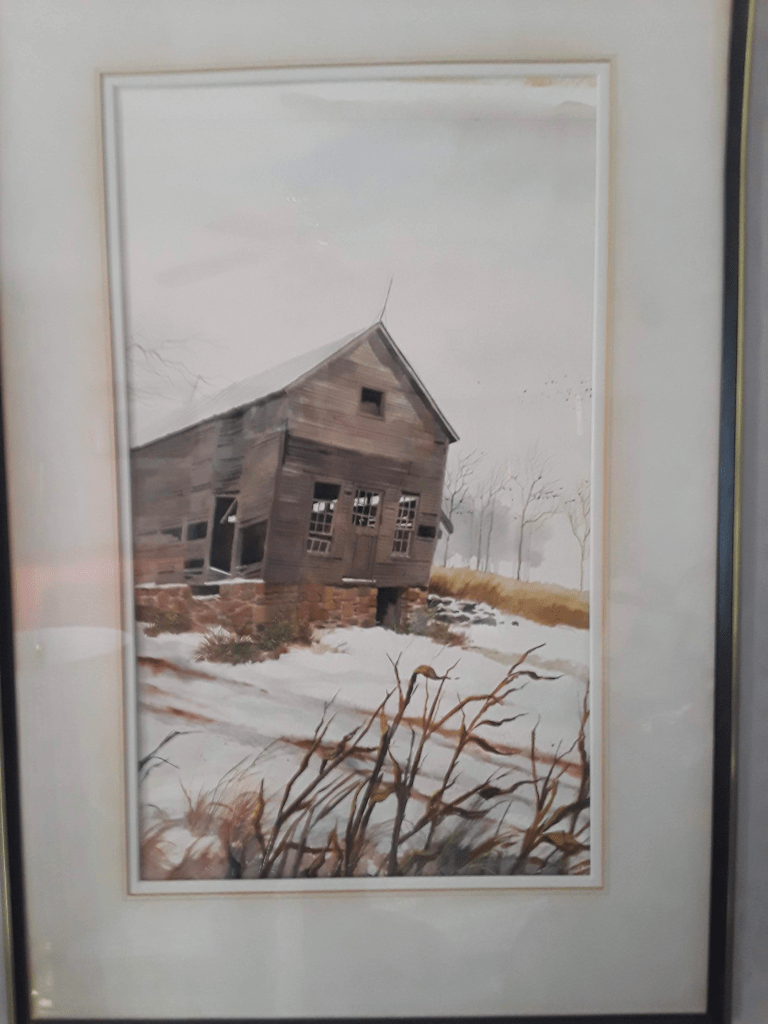
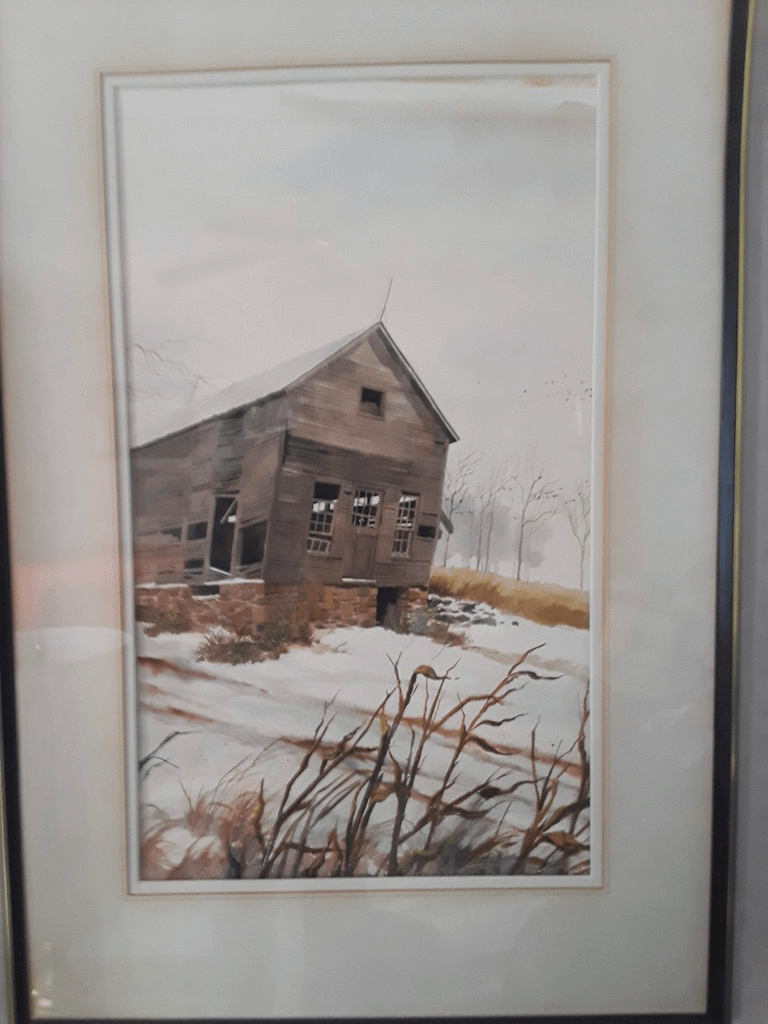
A not so good photo of the painting of the dilapidated (since demolished) Styer Store, which was originally positioned opposite the Styer Home across Styer Road. Ezra Styer, who was physically disabled in some way, operated the store where Styer produce was sold.

I ought to include a note on Ezra that I missed in the earlier article. I always found it strange that he should have gone so late in life without marrying or leaving home. Analysis of the 1880 Census record shows that he was either “maimed, crippled, bedridden, or otherwise disabled.” According to the terms of the census, he was neither blind, deaf, dumb, mentally disabled, nor insane, so one wonders what the condition of his disability was. All we can say is that he never left home, never married, and died in his 40s. We may never know the answer. If anyone has any family history at this point, feel free to comment.  
In about the year 1884 Cyrus and Harriet got itchy feet and decided to Go West. They purchased 325 acres of ground in Shannon County, Missouri and farmed there for four years. Later in 1884, they had their last child, Charles Cornelius, our direct ancestor. Family tradition records that the land they bought in Missouri was so rocky they couldn’t really make a living on it, so they returned to West Hemlock Township in 1888 and purchased the old homestead, where they remained. Peter Styer (son of Wilbur and Florence) found that after Cyrus moved his family back to Pennsylvania, he leased the property (Info from Styer Memories video). Another story said Grandad Charles travelled out west to sell it in the 1920s or 30s.  After returning to Pennsylvania, Cyrus and his family operated the ancestral Clover Hill Farm as a produce enterprise, growing orchard fruits, vegetables, berries, and various poultry and pork products to be sold in their own store and abroad at various local town markets.[2]

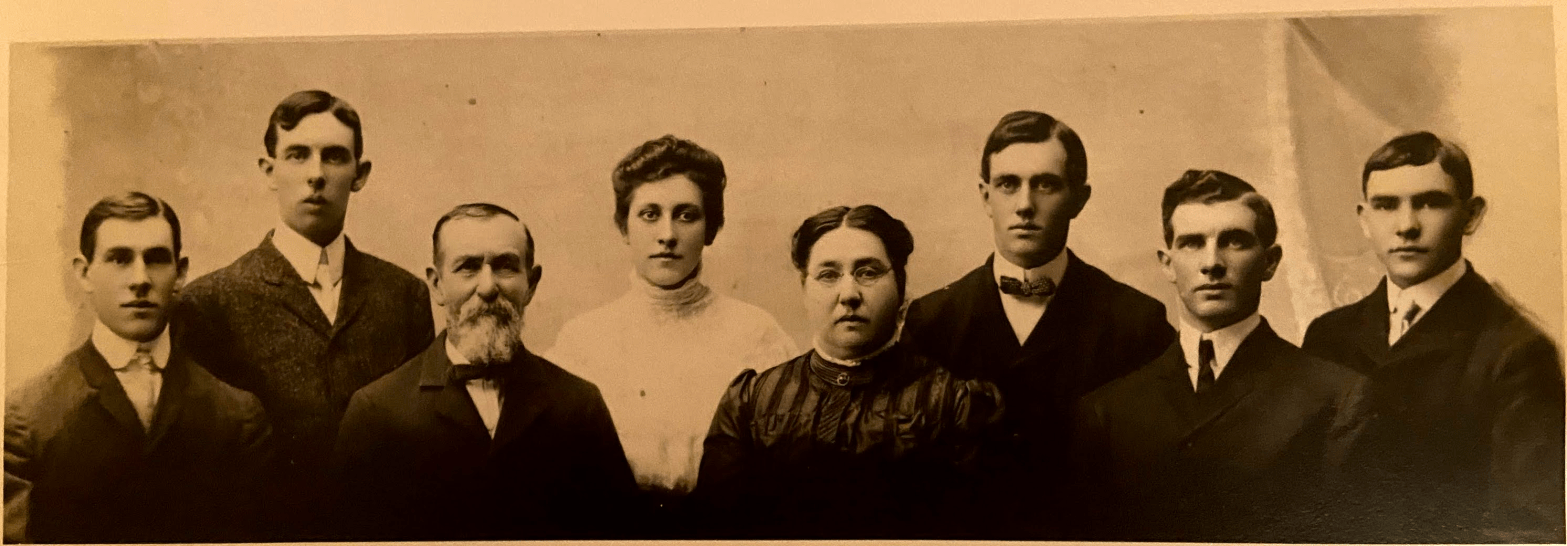
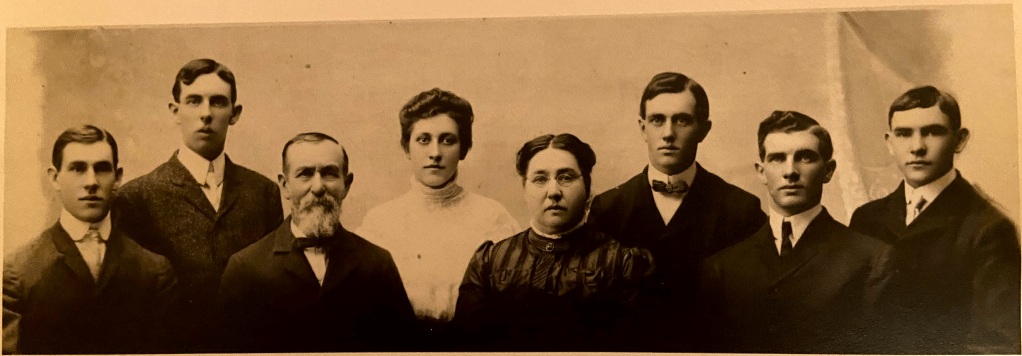
Family photo: L-R: Paul, George, Cyrus, Sally Deighmiller Styer (wife of George), Harriet, Samuel, Peter, and Charles

Death and Legacy

In May 1914, tragedy struck the family when Grandma Hattie unexpectedly passed away. Her death certificate shows that she died of a heart attack in Philadelphia after having a surgery related to uterine cancer at the Gynecean (Women’s) Hospital in Philadelphia. Around the time of her death, the newly married Charles and Emily (Crossley) Styer worked the farm with Cyrus. While they lived at the old Styer home, Ralph, Leonard, and Allen were born.

After Charles and Emily moved to the farm in Liberty Township, his older brother Peter Brugler Styer and his wife Lillian farmed the Styer home. (For more on Charles and Emily’s decision to move out and many other interesting family stories, watch the excellent Styer Family Memories video on Youtube. A big thanks to Eugene Styer for uploading this to the internet for everyone to access). Cyrus died in 1920, succumbing to intestinal and cardiovascular trouble. Besides being Presbyterian in religion, he was also staunchly anti-alcohol and a member of the Prohibition Party.

The Children of Cyrus and Harriet Styer were as follows (In the future I would like to do a post on each son):

  1. George Rufus Styer (1877-1921) was an educator. He graduated from Susquehanna University to be a teacher and worked as a principal at Berwick, Montoursville, and Oxford (Chester County) School Districts in Pennsylvania. He was married to Sarah (Sally) Deighmiller, was a Mason, and a member of the Presbyterian Church.
  2. Peter Brugler Styer (1879-1959) spent some time working for a lumber outfit in Washington State. His wife Lillian (Freas) preceded him in death by 9 years. They farmed the old Styer home on Columbia Hill until his death. His son and daughter-in-law, Paul and Nancy, took over the old homestead, where Nancy still resides. Peter was a Mason and a member of the Presbyterian Church on Columbia Hill. His other two daughters were Pauline Krum and Martha Stine.
  3. Samuel Tyson Styer (1880-1942) was a farmer in Columbia County. He married Nellie Ohl, and had four children, Martha and Cyrus who died as infants, and Harriet (who married Ariel Boop) and Esther (who married Charles Harris and later Val Gohmert). Samuel died at Bloomsburg Hospital after he fractured his skull as a result of a fall off a loaded hay wagon.
  4. Paul John Styer (1884-1941) married Margaret Moore and had the following children: Martha Lois (who married Wilmer Kitchen) and Ruth Irene(who married Jon Harabes). He died of testicular cancer in 1941. According to the censuses of 1930 and 1940 Paul was an electrician for a construction company.
  5. Charles Cornelius Styer (1888-1964), our direct ancestor, was born in Summersville, Shannon County, Missouri. He married Emily Crossly Styer and will be the topic of a later blog. To quote the Spare Family genealogy, “They have a large family.”

Cyrus and Harriet also must have been interested in family history. There is newspaper clipping concerning a Lutsey Reunion in 1903 at the old Lutsey homestead in Slocum Township that mentions that the Cyrus Styer Family was in attendance (Remember the Fairchilds were descended from John Lutsey who was a Hessian soldier). Their children bore ancestral names like Peter Brugler (after Hattie’s grandad), George (after Cyrus’ uncle), Samuel Tyson (after Hattie’s dad and Cyrus’ grandmother’s family), and Charles’ middle name, Cornelius (after Cyrus’ father). The fact that the family appears in the 1915 Historical and Biographical Annals of Columbia and Montour Counties (a publication in which one could pay to have one’s family  history recorded) demonstrates that the family was not only interested in genealogy, but they were willing to pay money to have the status of having their family’s story listed among local blue-bloods and historical characters.

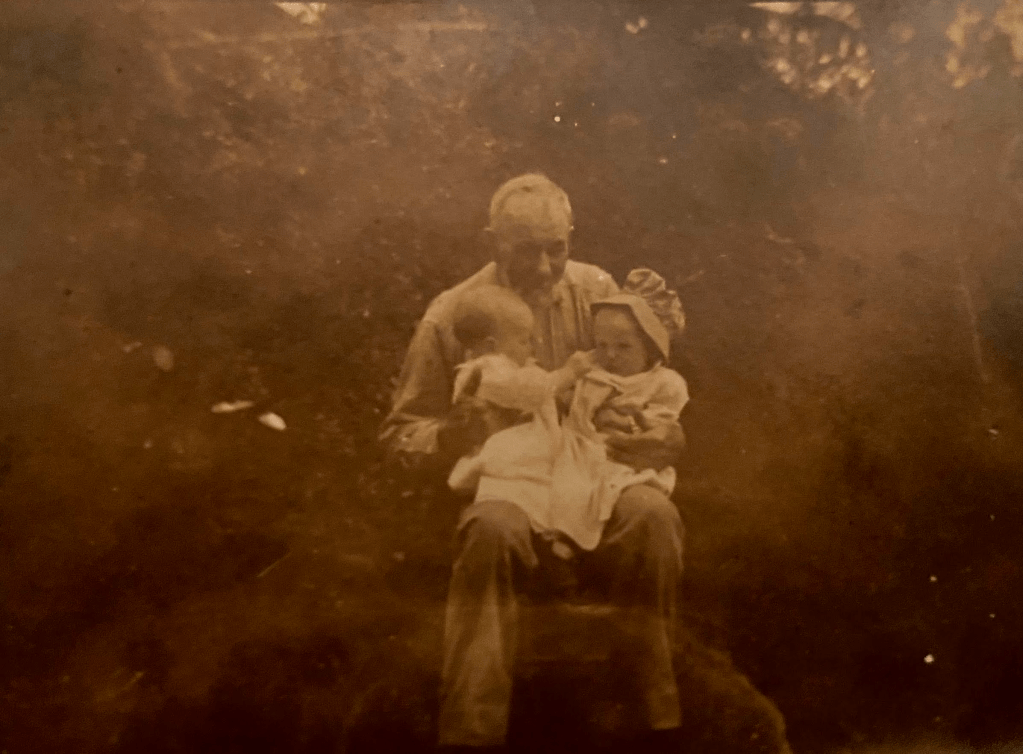
This heartwarming photo shows Cyrus holding two of his grandchildren. The boy is my great grandad Ralph Styer and the girl is Harriet, Sam and Nellie’s daughter, I believe. Just think, if you ever hugged or shook hands with one of these two, you are only one person’s touch away from the Civil War.

Cyrus and Harriet continued Styer traditions of farming, Presbyterian Christianity, opposition to alcohol, and interest in family history. Cyrus took up arms to defend his homeland in 1862 and later left that land for the promise of Western prosperity- only to return four years later to the family homestead.  

The next several posts will concern the lineage of the Crossley Family along with their associated matrilineal lines of the Carr, Wintersteen, and Wilson families. After these, I will finally get to Charles and Emily Styer.


[1] 1880 Federal Census for West Hemlock Township, Montour County, PA, page 5.

[2] Historical and Biographical Annals of Columbia and Montour Counties, page 402.

Meet the Family: Episode 9- The Brugler Connection (Part Two)

I think it is a truism that at least in the Charles and Emily Styer family, many members of our clan are known for their mechanical abilities. Scores of our relatives have made their living from such work. According to the Biographical Annals of Columbia and Montour Counties, Samuel Brugler (7/29/1787-3/9/1868) may have been where this mechanical gene originates. He is remembered for his great aptitude for tools, building many of his own farm implements as well as cider presses and threshing machines.

When the White Hall Hotel in Anthony Township was rebuilt in 1849, Samuel Brugler was engaged to do all the woodcarving and architectural embellishments there, although by the time the Biographical Annals were compiled (~1915), the Hotel was in a state of disrepair. The description from the book is as follows:

White Hall Inn was built in 1818 by Capt. John F. Derr, and rebuilt in 1849 by Ferdinand Ritter, who had the ambition to make it a famous resort for travelers. It is probably the most elaborately carved building in this section of Pennsylvania, the work being done by Samuel Brugler of Jerseytown. Over the wide porch is a panel of some length, depicting an eagle holding two American flags and standing upon two cannon. Above the door is a large piece of scrollwork, while on each side are fantastic animal heads. The panels of the door are also hand-carved, as are also the capitals of the fine Corinthian columns. When in its prime, and with a coat of pure white paint upon it, this inn must have presented an imposing appearance to the arriving traveler, even in its last days of decay and neglect it has an impressive dignity that makes it overshadow the more modern buildings around it

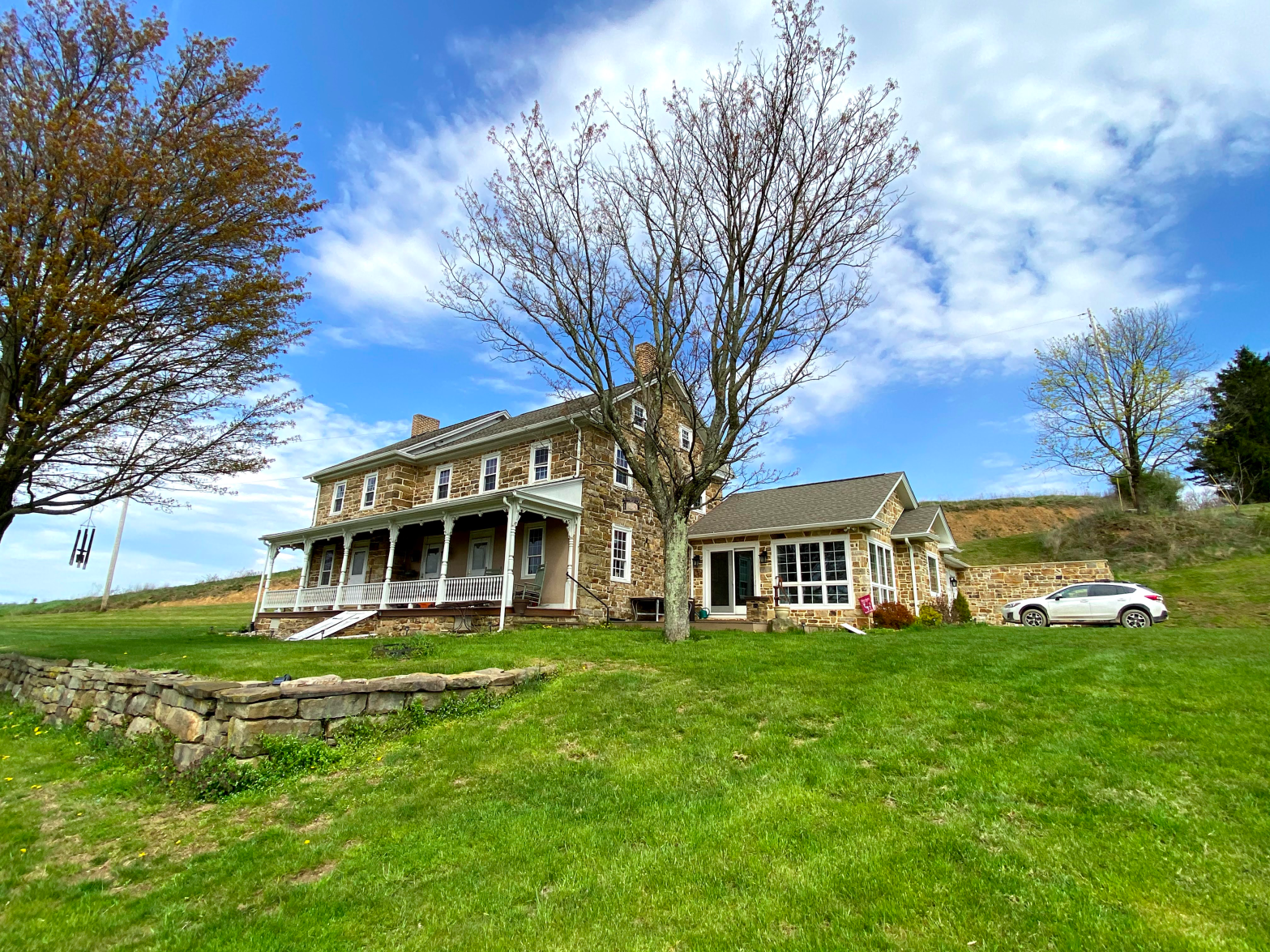
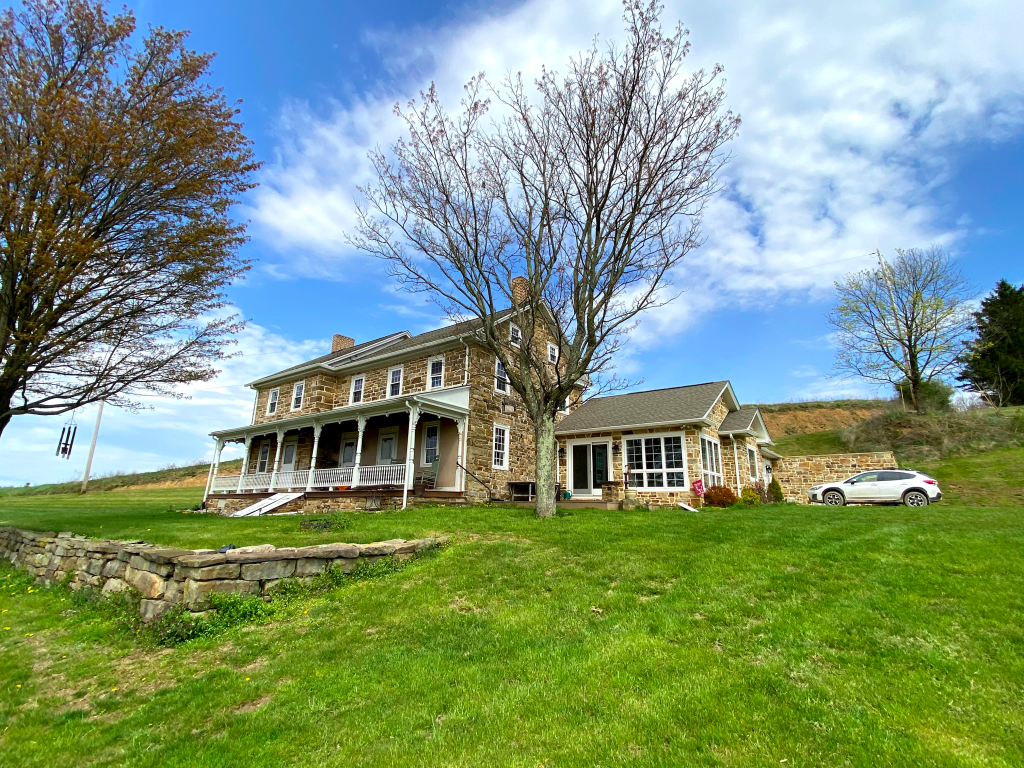
Samuel was a Democrat like his father and served as a school director. He and his wife were also members of the Presbyterian Church. He moved from Frosty Valley up Columbia Hill Road and built the fine farm which includes a barn and a beautiful stone farmhouse on ­­­­Orchard Drive, recently occupied by Pauline Krum (née Styer, daughter of Peter and Lillian Styer) and her husband Carl. It has since been sold to their nephew and his wife, Joe and Katie Yodock. The farm is currently the location of the Stonehouse Berry Patch.

The lovely 1820 Brugler Homestead on Orchard Drive. The gives the name to the Stonehouse Berry Patch. The main part of the house was likely built in two parts.
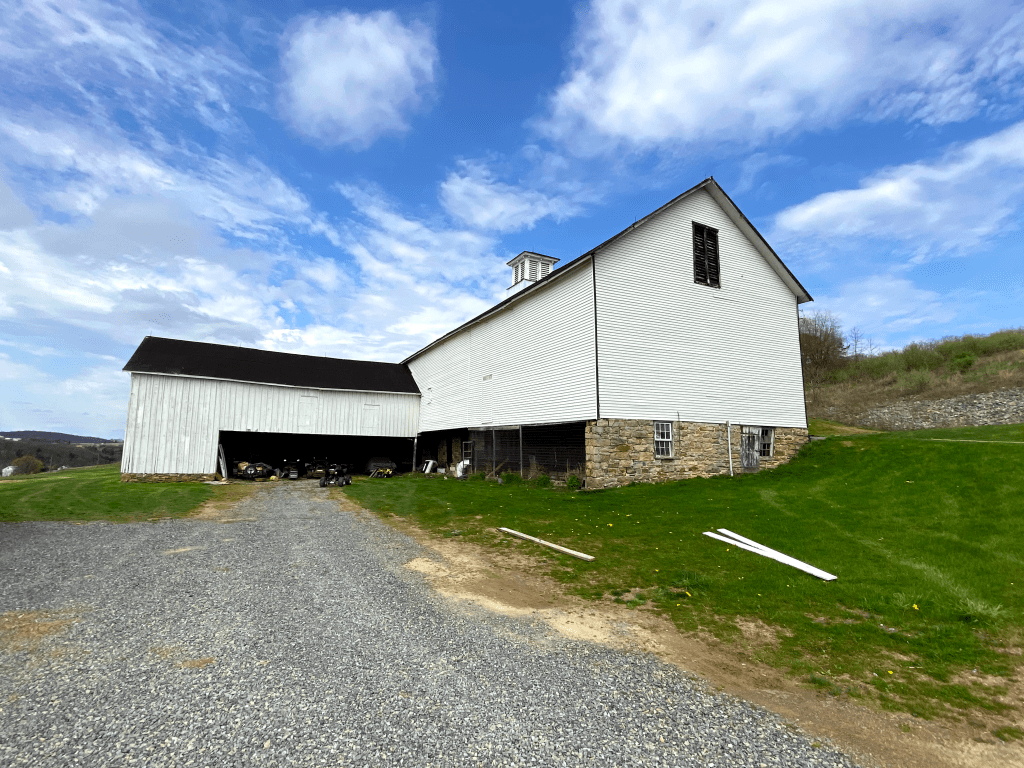
The Brugler Barn. The original part lies in the center of the structure, with the straw/cattle shed on the left and an extension to the right being later additions. Carl and Pauline Krum raised pigs in the lower floor of the barn. The date “1820” is carved into one of the beams in the upper floor of the barn.
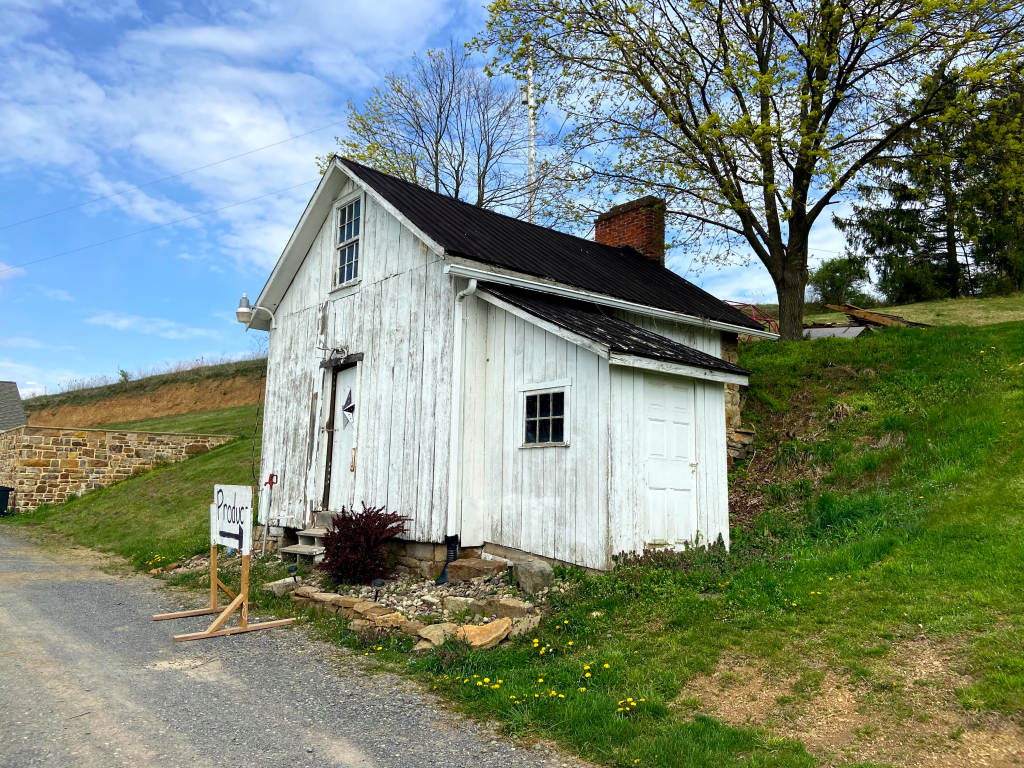
This operational springhouse has a spring room accessible by the door on the right. The main door on the left leads to a summer kitchen with a large walk-in fireplace and an upstairs crawlspace. Family tradition holds that the Bruglers lived in the springhouse while the built the stone house.

Samuel married Jane Everett (1806-1870), whose parents were James (1781-1859) and Isabel (Moore) (1778-1849) Everett. They had the following children (Notice how many died in young adulthood):

  1. Sarah Ann, 11/27/1828-8/12/1891, married William Young, buried at the Odd Fellows Cemetery in Danville.
  2. Isabella Jane, 12/2/1830-11/5/1854, buried at Columbia Hill at age 24.
  3. Mary Elizabeth, 7/19/1832-3/4/1851, buried at Columbia Hill at age 19.
  4. Lucy Wintersteen, 11/27/1834-7/2/1857, buried at Columbia Hill at age 23.
  5. Peter Snyder, 8/15/1837-3/30/1913, married Christianna Everett
  6. James Everett, 2/10/1840-12/25/1861
  7. Lydia Catherine, 10/28/1840- ???? Married Reverend John Thomas and lived at Coolidge Kansas
  8. John Hudson, 8/16/1843-10/8/1920 married Augusta Morgan. Served in the Civil War as a Private. Eminent Local architect who designed many structures in Danville such as the Montour County Jail (1893)[1], the former Immanuel Baptist Church (now used as the Bloom Naturally Health Food Store, Leniger Brothers Drug Store building at 134 Mill Street (1901), the Jennings residence at 104 West Market Street, c. 1897 (NR, 1985, West Market Street Historic District), and the first Geisinger Hospital Building[2].
  9. Harriet L. 3/6/1845-????, our ancestor, married Cyrus Fairchild Styer
  10. Martha Matilda 9/10/1847-7/24/1869, buried at Columbia Hill.
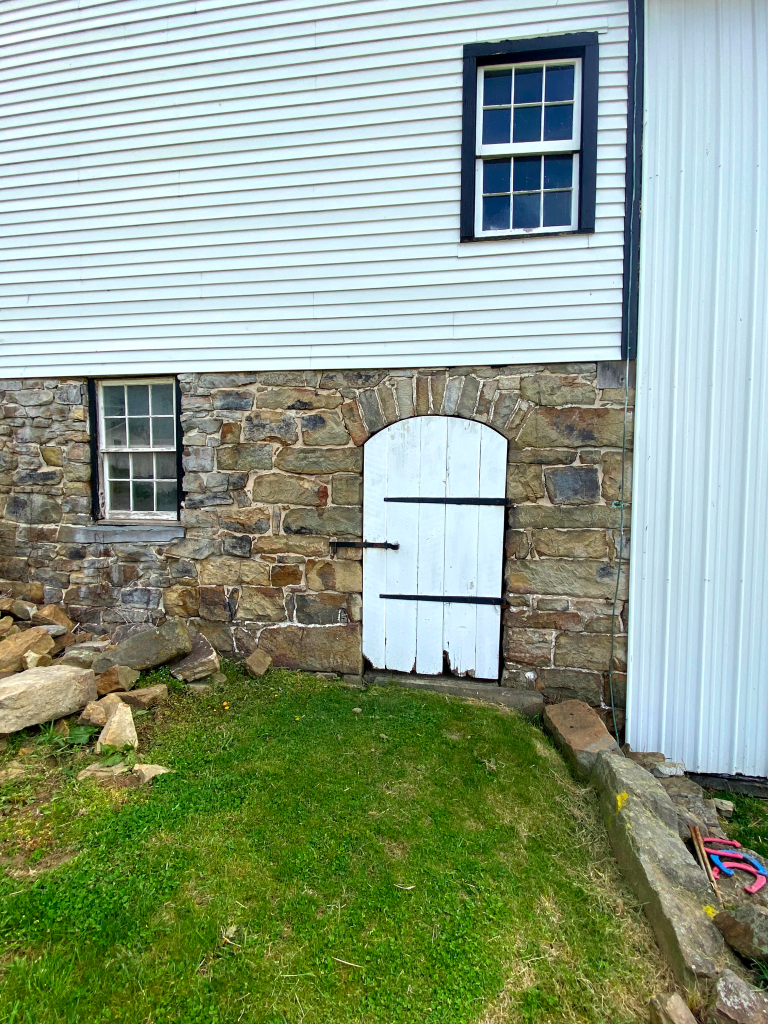
This picturesque door leads from the west end of the barn into the barnyard. Bob Heim, who did lots of work for Pauline Krum during her later years, redid this door, including some of the ironwork, which he hand forged.
Current owner, Joe Yodock, is a metal detectorist. He found several interesting pieces. Here are a pair of Brugler Family spectacles. Notice how the wires would allow the size to be adjusted.
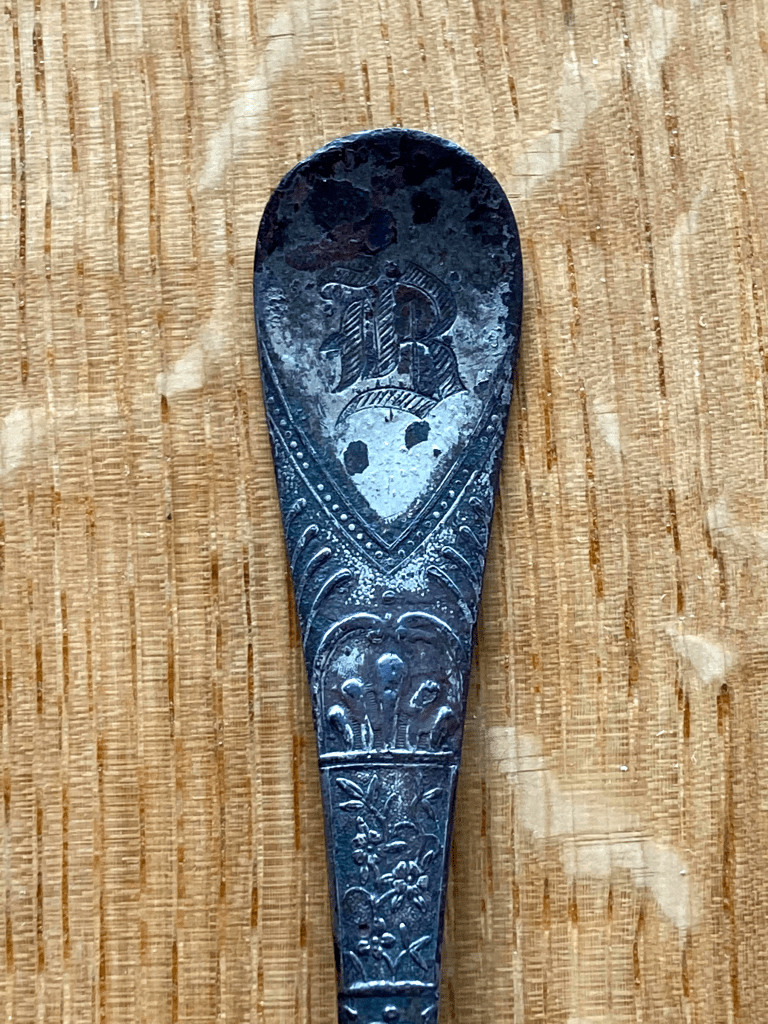
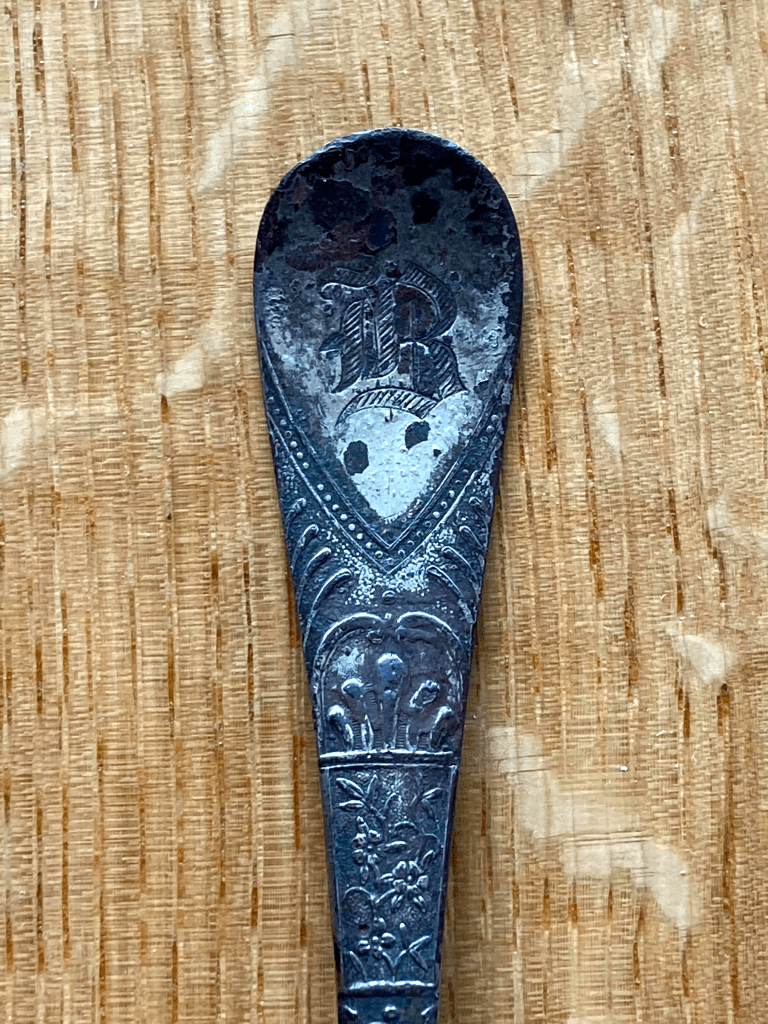
Joe also found an old spoon. If you look close, you can see that there is a German script “B” for Brugler at the top.
The “B” for Brugler

The Bruglers have left our family quite a legacy. Peter Brugler was one of the original settlers in the Montour-Columbia County area and a great hunter. Samuel Brugler showed himself to be a great mechanic and artisan. Our uncle and Civil War veteran, John H. Brugler, was a successful local architect, many of whose buildings still exist today. We see in these ancestors a great propensity for industry, creativity, and hard work. I hope you will join me next time when we discuss our ancestors Cyrus and Harriet Styer! The post will include information on the Civil War, Prohibition, Westward Migration, and more.


[1] BACMC, Vol 1., p. 277

[2] https://www.livingplaces.com/PA/Montour_County/Danville_Borough/Danville_Historic_District.html

The Wunnerfitz: Memorial Day 2020

Happy Memorial Day! I want to start off by thanking everyone in the Styer clan who has served our country in the past. One of my long-term projects will be to create a list of our family members who served in the Armed Forces. Today’s edition of the Wunnerfitz will be dedicated to honoring our Styer veterans who made the ultimate sacrifice to the defense of their country during the Civil War.

Our direct ancestor, Cyrus Fairchild Styer, served in the Civil War as a member of a short-term emergency militia regiment which was part of a contingent that was raised during General Lee’s 1862 invasion of the North that resulted in the battle of Antietam. He did not see any heavy fighting, thankfully, and after the battle and Lee’s withdrawal from Maryland, his unit was disbanded, and he went home to help on the farm. However, not all our Styer ancestors saw such light service.

Battle of Antietam Facts & Summary | American Battlefield Trust
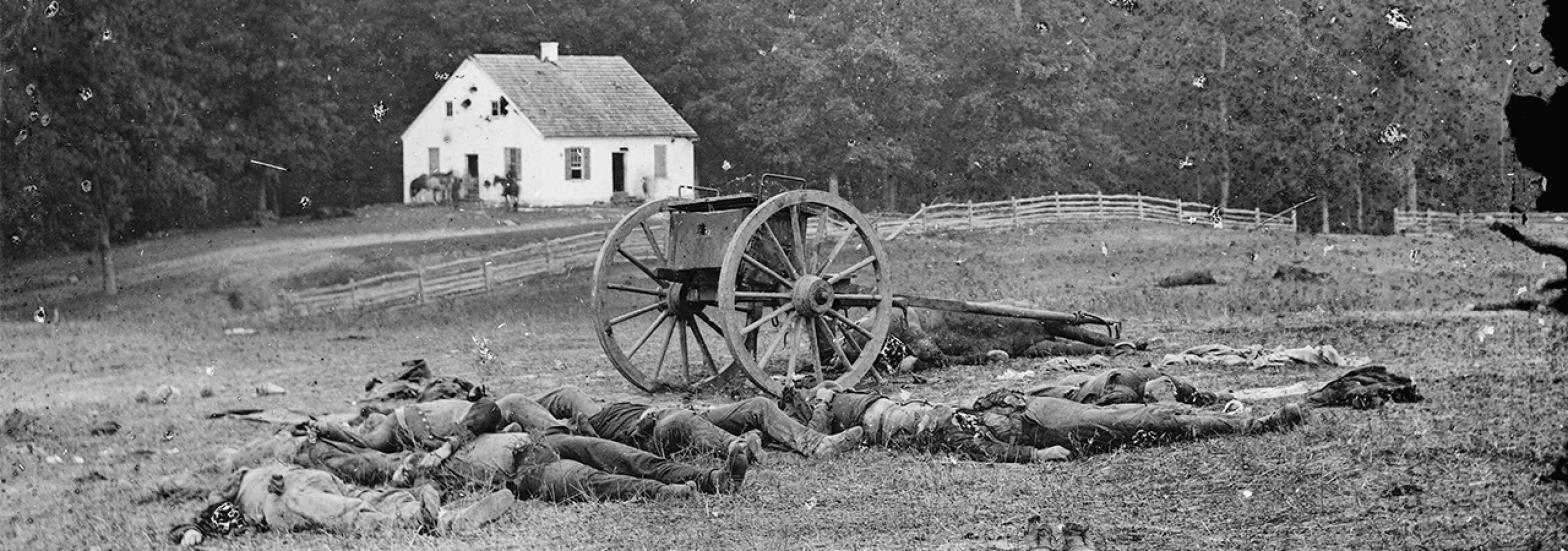
The aftermath of the Battle of Antietam, in which luckily our grandfather Cyrus only played a small part. Photo taken from https://www.battlefields.org/learn/civil-war/battles/antietam

Corporal John H. Styer: Was Cyrus Styer’s first cousin (the son of George W. Styer and his first wife Catherine) and enlisted in the 84th Pennsylvania Infantry. He was soon promoted to Corporal but was fatally wounded at the Battle of Fredericksburg (12/11-12/15 1862). According to his tombstone, he died at the Armory Square Military Hospital in Washingon D.C. less than a month later on January 9th, 1863. His grave is located in the old Pine Grove Cemetery in Berwick. The local Berwick chapter of the Sons of Union Veterans organization was named in his honor. Interestingly, he was mentioned in a semi-autobiographical book written by one of his comrades, Jesse Bowman Young. The following quote comes from his book What a Boy Saw in the Army (1894):

            “Among the fatally wounded in the battle of Fredericksburg was one of Jack’s beloved schoolmates and lifelong companions, Corporal John H. Styer, of Berwick, Pennsylvania, an overgrown, rollicking, well-reared stripling, who enlisting in Clarence G. Jackson’s squad a few weeks before, had with eager loyalty joined the regiment at the front. In his first fight he manifested steadfast courage; severely hurt, he lingered for some time, and then heroically passed away, one of the youthful martyrs of liberty.”

Corporal Styer’s tombstone is inscribed with a hard-to-read inscription taken from a poem that thankfully was written down and preserved by Cyrus Styer’s sister, Ellen Crim:

He is among the number whose name the country shall give in charge to the sweet lyre. The historic muse, proud of her treasure, marches with it down to the latest times…”

  • From William Cowper’s “The Task”
Corporal John. H. Styer’s gravesite in Berwick. Directly behind him is his aunt Elizabeth (Styer) Hoffman and his grandfather Leonard Styer.

Private George Styer: was Cyrus Styer’s second cousin. His father Joseph Tyson Styer (Cornelius Tyson Styer’s brother) left Pennsylvania in 1824 to settle in Delaware County Ohio, where many of his branch of the family are buried. Joseph’s son George enlisted in the 96th Ohio Infantry. He was mortally wounded during the siege of Vicksburg. He was transported to the Jefferson Barracks Military Hospital in St. Louis, MO, where he died on 2/7/1863. His body was shipped back to Ohio, where he is buried. Vicksburg would not fall to Union forces until July 4th, 1863.

George Styer’s grave in Delaware County, Ohio.

Lieutenant Colonel Milton Opp: was the child of Phillip Jr. and Hannah Smitih Opp. I have reason to believe that Milton’s grandfather, Phillip Sr. was married to our ancestor Hannah Wilson, who is one of our aunts on the Crossley side of the family (I’ll do a blog on the Wilsons in the future). Anyway, the long and short of it is that he was a distant cousin of ours. Milton enlisted in the 84th PA Infantry as a first lieutenant after having graduated from law school and passing the bar exam. By 1864 Milton Opp had moved up the ranks and had taken command of the 84th as a Lieutenant Colonel. Leading a charge during the battle of the Wilderness, he was mortally wounded, and died days later on the 9th of May, 1864. Opp was in the same unit as our ancestor Cpl. J.H. Styer above. He grew up in Muncy and The Muncy Historical Society is currently in possession of the field desk he used during the War. He is buried in the Muncy Cemetery.

Lieutenant Colonel Milton Opp

Corporal John R. Styer: was a distant cousin of ours, descended from the Styers who stayed in the Montgomery County area. He enlisted in the 1st Pennsylvania Cavalry and was killed at the battle of Haws Shop 5/28/1864. The Battle of Haws Shop was part of the larger Overland Campaign that included the Battle of the Wilderness during which Colonel Opp met his death. He is buried at the Cold Harbor National Cemetery in Virginia.

Corp John R. Styer
John R. Styer’s gravesite, Cold Harbor Cemetery, VA.

I’m sure I have not covered all of the Styer ancestors who sacrificed life and limb during the Civil War, but this small list should begin to give us a taste of the devastation it caused. Like World War Two, the Civil War effected the whole country and defined a generation. I hope we all be grateful for what these and other veterans did and gave to preserve our nation and our freedom. Have a blessed Memorial Day.

  “Patriots have toiled, and in their country’s cause
Bled nobly, and their deeds, as they deserve,
Receive proud recompense.  We give in charge
Their names to the sweet lyre.  The historic muse,
Proud of the treasure, marches with it down
To latest times; and sculpture, in her turn,
Gives bond in stone and ever-during brass,
To guard them, and to immortalize her trust.”

-William Cowper, The Task, Book V

You asked, we answered: Why do we celebrate Memorial Day ...
Taken from: https://americanhistory.si.edu/blog/2013/05/you-asked-we-answered-why-do-we-celebrate-memorial-day.html

Meet the Family: Episode 8- the Brugler Connection (Part One)

On September 23, 1873, Cyrus Fairchild Styer married Harriet Brugler. Grandma Harriet was the descendent of an old Montour/Columbia County family which is the topic of this edition of Meet the Family.

The gravesite of Peter Brugler at the Columbia Hill Cemetery.

Our oldest ancestor in the Brugler clan that I have been able to uncover for sure is Peter Brugler (~1755-1843), Harriet’s grandfather. It appears that Peter was a resident of New Jersey at the time of the American War of Independence. According to Cummins’ 1911 History of Warren County, NJ, the Bruglers were of Dutch origin.

The gravesite of Anna Brugler next to her husband at Columbia Hill.

At some point, Peter Brugler married his wife Anna (1767-1852), while they still lived in New Jersey. After the birth of their second child, they moved to Pennsylvania, first settling in the Chillisquaque region in 1788, later moving to Jerseytown (So named due to all the New Jersey settlers in the region), and later still to the Frosty Valley area, near a smaller valley called the “Liebenthal[1]” where he later died after having amassed an estate of about 600 acres.[2] Peter and Anna were Presbyterians and Peter voted Democrat. Their children were as follows:

  1. Mary: 8/15/1785, married William White, there is a Mary White born in 1785 whose husband was William in the Dodson Cemetery, Luzerne County, PA. I believe her to be Mary Brugler, but do not have solid proof.
  2. Samuel, our ancestor: 7/29/1787-3/9/1868, married Jane Everett
  3. Sarah: b. 3/21/1790
  4. Catherine: 10/10/1792-12/23/1868, married John Snyder of Burdett, NY.
  5. John: 3/21/1795-5/8/1864, married Mary Kinney. They are buried at Old Rosemont Cemetery in Bloomsburg.
  6. Elizabeth: b. 11/8/1798
  7. Anna: 8/20/1801-1872, married Aaron Blue (1798-1885), the scion of an old New Jersey (Holland) Dutch family whose descendants still populate Montour and Columbia Counties. Aaron and Anna eventually settled in Iowa, where they are buried.
Art depicting various militia units during the colonial and American Revolutionary War. American Revolutionary War, American War, Early American, American History, Independence War, American Independence, Military Art, Military History, Military Uniforms
A depiction of an average militiaman in the Revolutionary War by Don Troiani. Photo taken from: https://www.pinterest.com/pin/98516310579888352/

Peter was a soldier in the Revolutionary War: according to his Revolutionary veterans pension application, he was drafted twice in 1776 for month-long tours of duty in the state militia.[3] Both times he was discharged and returned to his home in Knowlton Township, Sussex County, NJ. He was called up twice again during 1777 for month-long militia duty. The second tour of which he was involved in a small altercation with the British while on guard duty protecting supply wagons. Brugler’s unit were surprised by a British ambush, but they escaped to safety through an orchard. He served two more months in the year 1778. It doesn’t appear he saw any action besides the ambush. Peter also mentioned in his testimony that as a member of the militia he was often employed in emergencies for several days at a time in order to round up local loyalists or pursue escaped enemy prisoners.

Peter Brugler was in his eighties when he applied for his veteran’s pension. By this late point in his life he had lost all the paper records which he could have used to support his claim, although prominent local men vouched for his character. His claim was rejected due to lack of evidence, and although the decision was appealed by his widow, and later by his son, our ancestor, Samuel Brugler, the case was finally laid to rest in 1864, over twenty years after Peter’s death in 1843 at age 90.

Hemlock Creek, along which Peter and Anna Brugler owned land. Photo taken from https://en.wikipedia.org/wiki/Hemlock_Creek_(Fishing_Creek_tributary)#/media/File:Hemlock_Creek_looking_upstream_near_its_mouth.JPG

One last anecdote related to Peter Brugler relates to his hunting. According to the stories recorded in the Biographical Annals, he was an avid and successful hunter.[4] Kay Heim told me a story that he was noteworthy for having killed one of the last Native Americans in this part of Pennsylvania. Here I will quote Battle’s 1887 History of Columbia and Montour Counties, Pennsylvania:

 “On one occasion while out hunting, he [Brugler] had an adventure which illustrates how much the life of the pioneer sometimes depended on cautious but decisive action.

The ground was covered with snow to the depth of several inches. He had followed a deer for some distance, when, on turning a hill, he came upon what at first appeared to be an entirely different trail, but the discovery of his own footsteps proved that he had made a circuit, and reached the same trail he had previously traversed, and at the same instant he noticed before him in the snow the prints of an Indian moccasin. Their contrast with his own tracks may have caused a momentary fear, but this only intensified the keenness of his faculties, as the certainty of his danger became conclusive. He remembered having seen a hollow tree when he first passed over the trail. It required but a few minutes to reach it and conceal himself within its dark recess. The stealthy tread of the pursuing savage could be plainly heard at a short distance, and presently his dusky form emerged from the pines into full view. Brugler waited till his rifle was well aimed at the eye of the Indian. The sequel [conclusion, that is] must be inferred. In relating the story, he never went beyond this point.”

“A Sound in the Stillness” by David Wright serves as a fitting illustration for the story of Peter Brugler and the Indian. Photo taken from http://www.easttnhistory.org/exhibits/voices-land-people-east-tennessee

There is research that needs to be done (or if it is done, made more public) regarding Peter’s heritage. The Bruglers were probably Dutch, like many New Jersey Settlers in the North Branch region. What is their wider legacy, especially in New Jersey? I will continue to work on this.

The Bruglers were important early settlers of the North Branch Valley, clearing and improving land that would make way for future European settlement. We can see the family participated in the American Revolution. Later this week we will continue to investigate the Brugler story with Peter and Anna’s son Samuel and his wife Jane. Join us again next time!


[1] Liebenthal (Love Valley in German) mentioned in Battle’s 1887 History of Columbia and Montour Counties, Pennsylvania.

[2] BACMC, volume 1, page 238.

[3] All the information related to his war service and pension application is taken from a document given to me by Kay Heim entitled, “Revolutionary War Declaration of Service, Peter Brugler.” It is a transcribed copy of a primary source.

[4] BACMC, volume 1, page 261.

Meet the Family: Episode 7- Cornelius and Rosanna Styer

Cornelius Tyson Styer (1807-1872) and Roseanna Fairchild (1815-1892) were married sometime around 1835. Cornelius was born September 18th in the year 1807 in Montgomery County, PA.[1] This generation is important because they were our first ancestors to move to Montour County, PA. They purchased and built what we know as the old Styer Home Place, on Columbia Hill Road: The Clover Hill Farm. They are the first of our line to be buried in the Columbia Hill Cemetery. Roseanna Fairchild Styer is the first of our ancestors to be photographed. They are indeed a significant generation of Styers.

Cornelius was born in 1807 in Montgomery County just before his parents, Leonard and Mary Tyson Styer decided to move to Luzerne County, PA. Cornelius grew up on his parents farm in “Newport Township about one mile from Lily Pond.”[2] At some point he met Roseanna Fairchild, the daughter of pioneer Connecticut settlers of Newport Township.

Rosanna Fairchild Styer, photo taken from https://www.findagrave.com/memorial/29077085/rosanna-styer#view-photo=26157529

Cornelius and Rosanna worked the Newport Township farm until the birth of their first child, Ezra, in 1835.  At this point they moved to West Hemlock Township in what is now Montour County, where they purchased a 150-acre farm on Columbia Hill Road. He was considered to be a man of “sound principles and good judgement” and served his community as the overseer of the poor and as township supervisor. He built a one-room schoolhouse on his estate that became known as the Styer school.

The old Styer home place on the Clover Hill Farm at the intersection of Styer Road and Columbia Hill Road. The current owner, Nancy Styer, was kind enough to allow me to take some photographs. Nancy is the widow of Paul Styer, whose father was Charles Styer’s brother Peter.
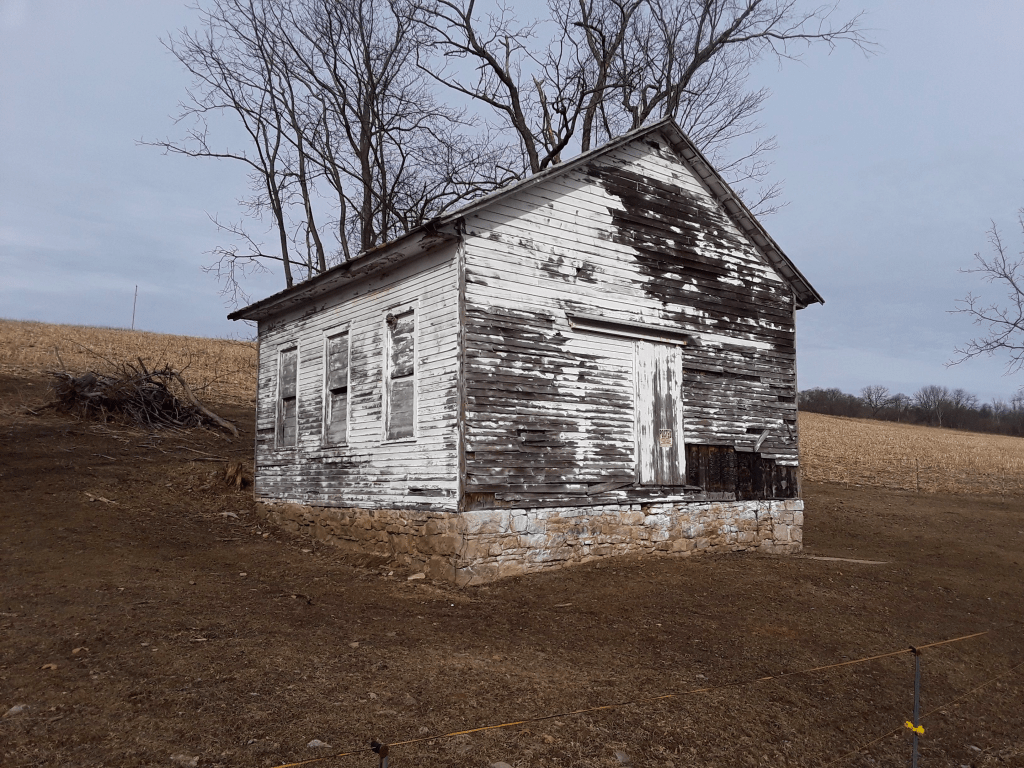
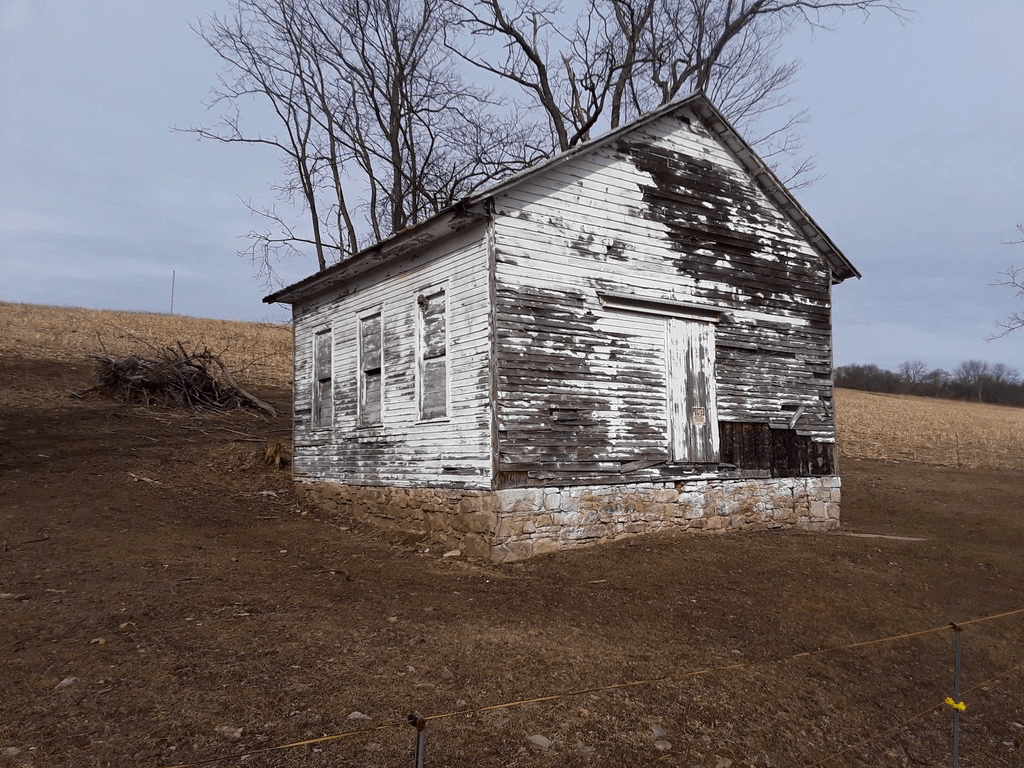
The Styer Schoolhouse on Kitchen Road. Many of the older generation of our Styer ancestors got their education here. Cyrus Styer was a teacher here for a while.

Politics and Religion

Cornelius is recorded as being an active member of the Columbia Hill Presbyterian congregation (since merged with the St. Peter’s Lutheran congregation who currently occupies the building across from the Columbia Hill Cemetery), where he served at different times as an elder and deacon. Roseanna came from a Presbyterian background and together they established a faith legacy which has carried down to modern times.

St. Peter’s Lutheran Church on Columbia Hill. This used to be a Union Church, shared between a Presbyterian and Lutheran Congregation. Kay Heim had several stories about growing up in this church. We have well over 100 cousins and ancestors buried in this cemetery.

According to the Biographical Annals of Columbia and Montour Counties, Cornelius Styer was originally a member of the Whig party, and made the switch to the newly-formed Republican Party during the time of Lincoln. Grandad Cornelius was not just a Republican voter, he was an important political player in the Danville area. On November 5th, 1864, a great parade took place in Danville. It was the night before President Lincoln’s 2nd election- the procession was replete with several brass bands and a float upon which rode women dressed to represent each state in the Union surrounding a lady dressed as the Goddess of Liberty, draped with Old Glory and carrying a liberty hat on a pole. This all went on during an awful wintry mix of snow and sleet. At the end of the parade, there was an outdoor rally, and among these die-hard Lincoln supporters was our grandfather, Cornelius Styer. He served as one of the vice presidents of the local Republican organization that arranged the parade.  Citizens like him helped to garner an electoral victory for President Lincoln and the Union cause during one of the darkest periods in our nation’s history.

Pro-Lincoln campaign poster for the 1864 Election. Lincoln’s victory is in part owed to political activists like Cornelius Tyson Styer. Photo taken from https://en.wikipedia.org/wiki/1864_United_States_presidential_election#/media/File:Republican_presidential_ticket_1864b.jpg

Cornelius and Roseanna worked hard to improve the land on what became known as the Clover Hill Farm the rest of their lives until their deaths in 1872 and 1892. They rest in the Columbia Hill Cemetery, among many of our other ancestors. This farm is still in the family and retains 104 of the original 150 acres. The barn burned earlier in the twentieth century, the old Styer farm store building has collapsed with age, but the main house, tenant house, schoolhouse, and corn crib remain.

The graves of Cornelius and Rosanna Styer at Columbia Hill. It is hard to get good photos of many of the old Styer graves because they rest beneath a grove of cedar trees which keep them permanently in the shade.

The children of Cornelius and Rosanna Styer are as follows.

  • 1st Child: Ezra Leonard Styer (1835-1882): It does not appear that he ever married or had children. According to the 1880 census, he was a storekeeper, so he probably ran the Styer produce Store which once stood across Styer Road from the main house.
The tombstone of Ezra Leonard Styer at Columbia Hill.
I apologize for the picture quality. This is a painting of the old Styer Store before it collapsed. Ezra Styer worked here until his death. It stood across Styer Road from the main house.
  • 2nd Child: Tacy Elizabeth Styer (1837-1910), married Sylvester Flick (1834-1918), a farmer. They had a very large family, on par with Charles and Emily Styer’s, as in 12-14 children.
Tacy Styer Flick and her husband, Sylvester. Sylvester Flick makes an appearance in the Grandmother Styer Diary.
  • Mary Pastorius Styer (1839-1881), married Jacob Karns. You can tell the Styers were proud of their ancestry by the fact that they gave Mary this middle name. Francis Daniel Pastorius, the leader of the first Germans to Pennsylvania in 1683, is a very distant relative indeed- his great-grandson having married one of our Styer cousins back during the eighteenth century.
The grave of Mary Pastorius Styer Karns. taken from https://www.findagrave.com/memorial/29076697/mary-p-karns
  • Cyrus Fairchild Styer (1840-1920): married Harriet Brugler. He is our direct ancestor, will be the subject of another Meet the Family Blog.
Cyrus Fairchild Styer
  • Emily Styer (1846-1886)
  • Ellen Styer (1850-1926) married Joseph Crim who was a farmer and builder.
Ellen Caroline Styer
Ellen Styer Crim, photo from Ancestry.com.
  • Anna Martha Styer (1853-1900), married Arthur Spear, a farmer.
The tombstone of the Spears and Martha’s in-laws. Taken from https://www.findagrave.com/memorial/143396434/anna-martha-spear#view-photo=171121688
The tenant house on the Clover Hill Farm. 150 Acres would be a lot for one family to farm. Many well-to-do farmers would have hired men or even rent their farms to tenants. Such people would occupy this house.

[1] Pink Book, P. 11.

[2] Ibid.

Meet the Family: Episode 6- The Fairchild Connection

Throughout American History, many people have wondered what their ancestors did during the American Revolution.  This curiosity has aroused common interest alike to young boys fighting out the Battle of Bunker Hill with cap guns or socially mobile ladies bent on joining the Daughters of the American Revolution. With mental images of the suffering soldiers at Valley Forge or George Washington leading his small but determined Army against all odds through campaign after campaign, it is easy to wonder just how one’s family fits into this great American drama. The Styers, as we have seen, as Mennonites, were conscientious objectors, and they paid dearly for the privilege, with cold hard cash. The Spares, Fairchilds, and as we shall see later, Bruglers, all participated in some way during the war. However, though a matrilineal line of the Fairchild family, we also can claim an ancestor who was a member of the other side… for a while… but the story of our Hessian soldier ancestor, Johann Lutze, will continue below.

A view of Newport Center Cemetery, Newport Township, Luzerne County, PA. Near Nanticoke. Most of our Fairchild ancestors are buried here.

 The son of Leonard and Mary Tyson Styer, Cornelius, married a woman named Roseanna Fairchild. Rosanna Fairchild was a descendent of John Fairchild (1753-1824), a Connecticut settler of English origin. John and his wife, Mary (van Dyne) apparently of Holland Dutch extraction, had several children, one of whom was our ancestor, Solomon Fairchild Sr (1783-1854). Solomon and his wife Elizabeth Lutsey (1789-1871) farmed a large tract of land in Luzerne County, PA.[1] One might ask, what circumstances led Connecticut natives to settle in Northern Pennsylvania? It is time for a quick diversion into the history of Pennsylvania-Connecticut relations.

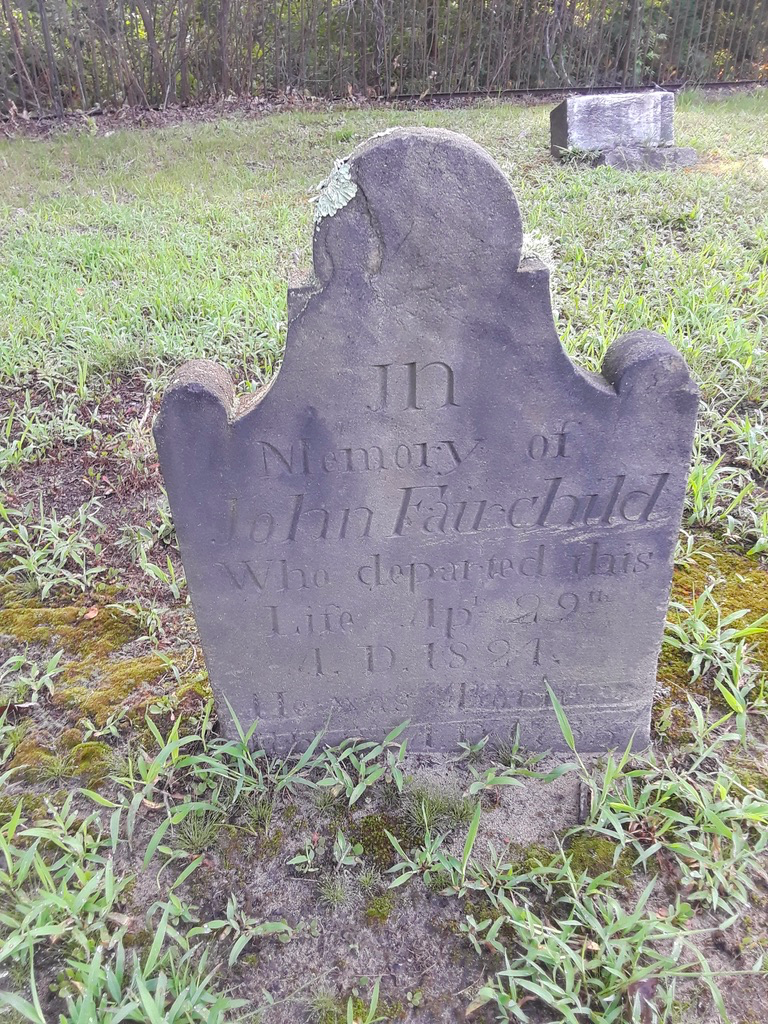
John Fairchild’s tombstone at the Newport Center Cemetery. He is the first Fairchild ancestor to migrate to America.
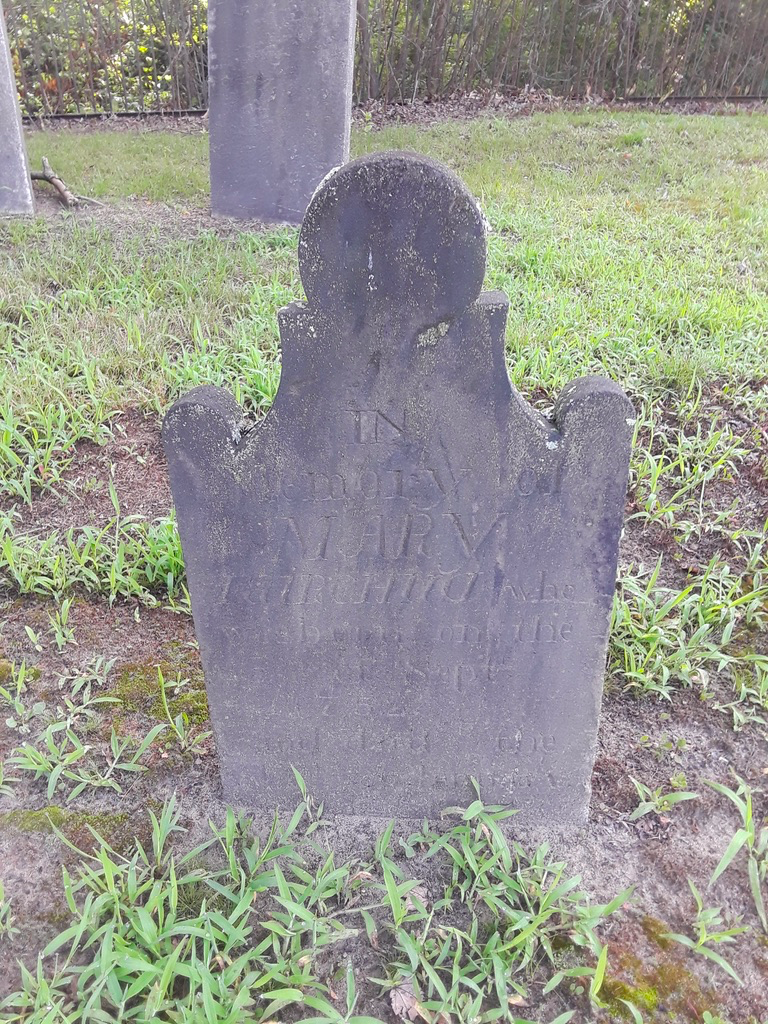
The tombstone of Mary van Dyne, wife of John Fairchild, Newport Center Cemetery.
The Graves of Solomon and Elizabeth (Lutsey) Fairchild at the Newport Center Cemetery.

Founded in 1681, Pennsylvania was a relative newcomer among the other original colonies. Connecticut, one of the more senior colonies, had a clause in its royal charter which later generations of Connecticuters interpreted as meaning that its northern and southern borders extended westward indefinitely! The result of this clause coupled with a fervent desire to make money on the part of Connecticut land agents calling themselves the Susquehanna Company was a long, interesting, and bloody conflict between that state and Pennsylvania. It is called the Yankee-Pennamite War and it was not resolved until the late eighteenth century. The Yankees seemed to come out on top, seizing the Wyoming Valley (Scranton/Wilkes-Barre) until during the Revolution they were chased out by Loyalists and Native warriors in the events that led up to the Great Runaway.

Image result for pennsylvania border disputes
Map showing the various boundary disputes concerning Pennsylvania, including the Connecticut claim which caused the Yankee-Pennamite war. From: https://en.wikipedia.org/wiki/Pennamite%E2%80%93Yankee_War

After the Revolution, the old border dispute cropped up again and the Wyoming Valley was once again occupied by factions from each state, the Fairchilds appearing as settlers from Connecticut. In a brilliant and often overlooked political move by Benjamin Franklin, a compromise was affected where Connecticut settlers got to stay within PA’s borders with acreage of their own, but had to leave their holdings in the Valley.[2] The new area to which they moved would be called Luzerne County. Many Fairchild relatives went on to inhabit the area between Bloomsburg and Nanticoke including our ancestors Solomon and Elizabeth. Nestled just south of the village of Alden, PA lies a body of water known as Fairchild Pond. One of our cousins operated an ice business there.  Uncle Fred Styer told me he met several Fairchilds in the Berwick area who knew they were kin to the Styers.

The oldest known Fairchild homestead, Enterprise Street, Nanticoke. Courtesy of the Nanticoke Historical Society.

A quick word on Solomon Fairchild’s wife, grandmother Elizabeth Lutsey- her father’s name was Johann Lutze. He was from Germany. He probably came to America dressed like this:

Image result for hesse hanau jaeger
John Lutsey/Johann Lutze was probably a jaeger (light infantry armed with rifles) in either the Hesse-Hanau or Ansbach-Bayreuth Contingent. Photo taken from https://www.pinterest.com/pin/662662532646037809/

Oh, yes! We have a Hessian ancestor. Hessian is a broad term used for the German mercenaries the British employed during the War of Independence. Not all of these mercenaries were from Hesse. In fact, Lutze was probably either a member of the Ansbach-Beyreuth (pronounced Bay-roit) or Hesse-Hanau regiment. If your heart sinks to know that one of our ancestors was indeed one of the hated Hessians, it is important for you to know that our ancestor either was captured or deserted less than a year after being brought to this country. And yes- I mean brought. I’ll do a “Wunnerfitz” article on this subject. Life as a Hessian soldier was not fun, even by contemporary military standards, a fact which encouraged thousands of them to desert and melt into the native PA German population. Our grandad Johann Lutze or John Lutsey, as he came to be known, lost no time in leaving the service of his prince, taking the loyalty oath to the United States, marrying an American girl, and moving to Luzerne County to run a farm.

Solomon and Elizabeth (Lutsey) had a large family. One daughter, Anna Fairchild, was the first husband of uncle Henry Styer, brother of our grandfather Cornelius, who in turn, married Anna’s sister, Rosanna. Rosanna Fairchild is the oldest Styer ancestor for whom we have a photograph (up to this point in time- there could be more).

Rosanna Fairchild, wife of Cornelius Styer photograph taken from: https://www.findagrave.com/memorial/29077085/rosanna-styer#view-photo=26157529

The Fairchilds were Presbyterians, and I suspect they were either from the North of England or the Lowlands of Scotland. Their immigration time fits with other Scots-Irish families, who made up the last major immigration to the colonies before the American Revolution. The oldest Fairchilds including John and Mary (van Dyne) Fairchild, Johann and Elizabeth Lutsey, Solomon Sr. and Elizabeth Fairchild, are all buried in a lonely but peaceful and well-maintained graveyard at the very south-westerly tip of the Wyoming Valley- an area which was once known as Newport Center. The village of Newport Center was demolished during strip mining operations and the cemetery lies within a stone’s throw of a big lake, stained orange from mine drainage. Although it is hard to find, it is worth a trip, due to the treasure trove of our Fairchild ancestors interred therein. However, if the time of year is right, bee prepared for the Cicada Killer wasps- They infest the place.

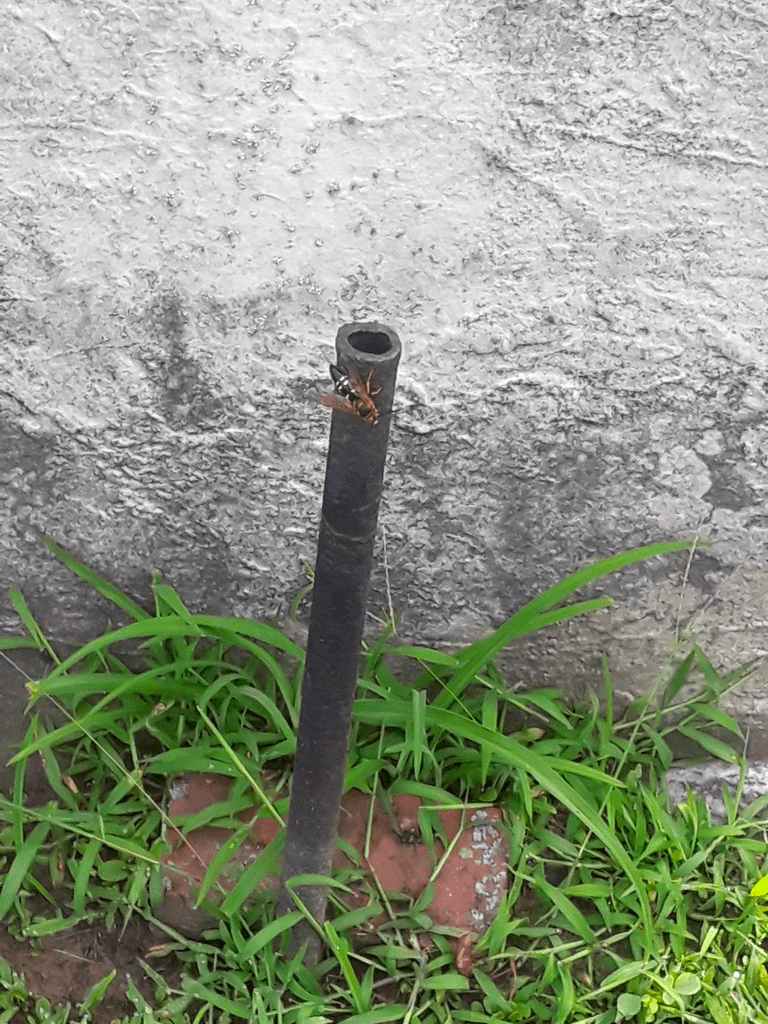
Cicada Killer at the Newport Center Cemetery. The downhill end where the Fairchilds are buried is infested by them.

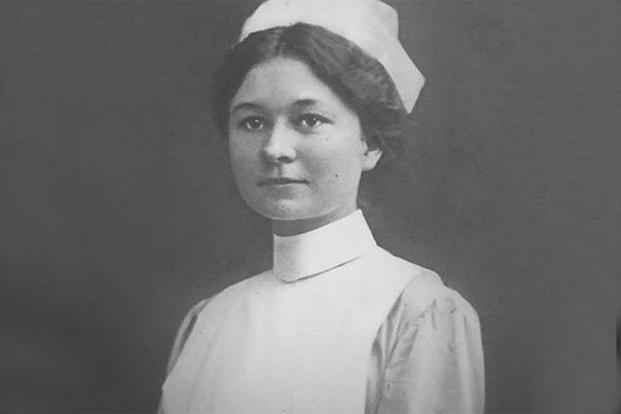
The final, but perhaps most lasting Fairchild legacy which I have discovered goes back to Rosanna’s brother, Solomon Fairchild Jr. His son, Ambrose, had a daughter named Helen. Helen, a native of Northumberland County, was an army nurse. She met her death due to an illness contracted while caring for wounded soldiers during World War One. Although she was buried in Europe in one of those great Arlington-like cemeteries which dot the former Western Front, her name is known to all Central Pennsylvanians who have driven across the Susquehanna between Watsontown and White Deer, PA on the Nurse Helen Fairchild Memorial Bridge, where her heroism and devotion to duty is commemorated.

Helen Fairchild
Our cousin, Nurse Helen Fairchild, who died in Europe in WW1. Photograph taken from: https://www.military.com/history/army-nurse-helen-fairchild.html

[1] Pink Book, page 12.

[2] Carla J. Mulford, ““Prevent[ing] … Restless Spirits from Exciting Disturbances”: Benjamin Franklin and the Wyoming Valley,” Pennsylvania History: A Journal of Mid-Atlantic Studies

Vol. 86, No. 1 (Winter 2019), pp. 1-37

Design a site like this with WordPress.com
Get started