In the year 1746, John Stephan and Gertrude Steiger’s son Jacob married Christiana Spare, daughter of Leonard (1692-1770) and Elizabeth Spare (1690-1776), Germans who came to America in approximately 1722.[1] Like the Steigers, they settled in Worcester Township, Philadelphia (now Montgomery) County. The Spares were of the German Reformed[2] faith and took part in the establishment of that denomination on American soil.
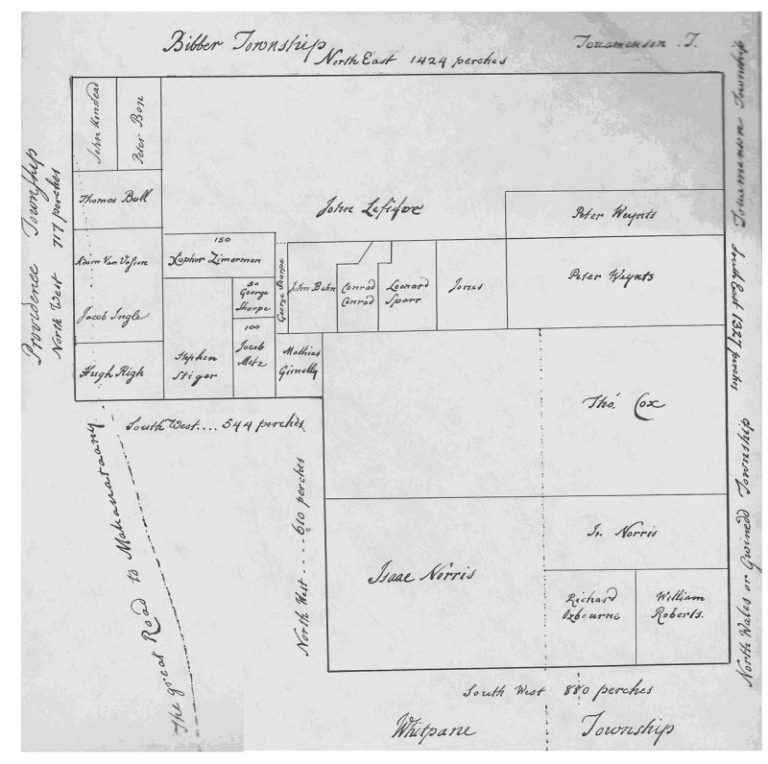
Leonard Spare served as an elder the Reformed congregation on the Skippack, which along with the Falkner Swamp[3] and Whitemarsh congregations, formed the foundation of the German Reformed denomination in America. Leonard Spare figured as a lesser player in a dramatic controversy that plagued the early history of that Church.
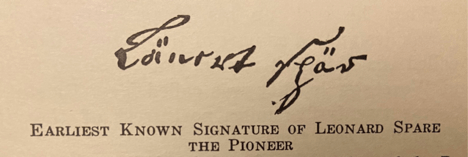
The Boehm Controversy
There were many issues facing European religious leaders in colonial Pennsylvania. There was no government-established church, so individuals were free to pick and choose from the marketplace of religious ideas flourishing at the time, and the Lutheran and Reformed churches in Germany drug their feet in sending ordained pastors to serve the spiritual needs of their colonial flocks. Due to the total lack of organization and absence of ministers, religious groups like the Moravians actively and successfully recruited members of the German Lutheran and Reformed congregations. It was into this context that a young schoolmaster named John Phillip Boehm entered the scene.[4]
Due to Beohm’s educated background and Reformed faith, it was not long before the pastor-less Reformed elders (including our ancestor, Leonard Spare) listed above asked him to read sermons during worship services. As time went on, he was prevailed upon to preach his own sermons and perform baptisms, communion, weddings, and funerals, all activities ordinarily relegated to ordained ministers. This arrangement proved fruitful, until 1727, when George Michael Weiss, the first ordained German Reformed minister sent by the denomination to the New World, arrived.
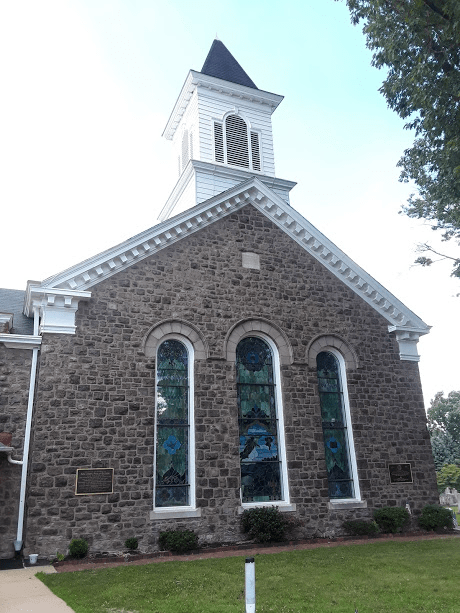
Weiss was a young man, full of the sense of power and authority which had been granted to him by the Reformed fathers in Germany to organize and establish the denomination in the New World, and to make sure congregations were not being led by heretics and charlatans. There was a real problem in colonial Pennsylvania with congregations being led by ministers who either did not have educational credentials or who had been censured by the religious authorities in Europe for theological or moral crimes. Weiss had been sent to restore order to the struggling denomination. Boehm was his first target.
Although Boehm did not share the bad qualities of the various spiritual hucksters and schlockmeisters who haunted the pulpits of early colonial PA (he actually seems to have done his best to remain faithful to the tenets of the Reformed faith), he did not have any credentials and a controversy ensued between he and Weiss and their supporters. This issue was only resolved when in 1729 Boehm traveled to New York to receive ordination from the Dutch Reformed authorities there. He brought with him a petition signed by all the elders who still supported his work, including Leonard Spare. In the petition, they apologized for their rash but understandable decision to call him to ministry without credentials; they vouched for his good character and theological soundness and asked for him to be ordained as a minister. Boehm received his ordination from the Dutch Reformed Classis (regional denominational authority like a synod, conference, or presbytery) of New York, and the controversy between he and Weiss came to a happy end.
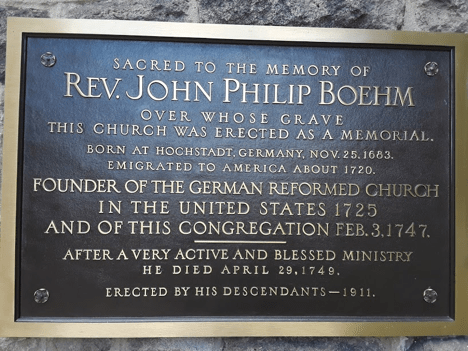
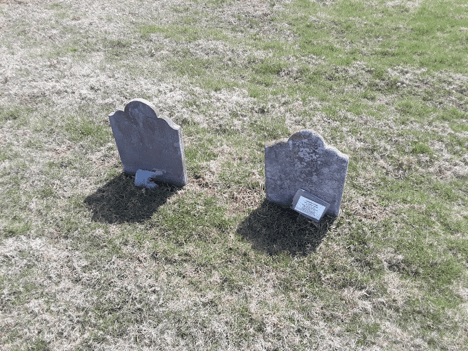
Leonard Spare, along with his son Philip, helped organize the German Reformed Church in Worcester Township, now known as Wentz’ UCC, in 1734.[5] He, his wife, Elizabeth, and many decedents are buried in the cemetery there. If you visit, it is still fairly easy to find Leonard and Elizabeth’s gravesites if you know what the stones look like. The writing is fairly worn. Better photos of the stones are available on their Find a Grave pages. And of course, it should be mentioned that Leonard Spare is the original “Leonard” namesake in our family- the name appears several times throughout our genealogy. He and Elizabeth had the following children:
- Philip (~1720-1799); married Anna Dorothea Gerber; served in the Revolution; bought the Spare family farm after the death of his father.
- Christiana (married Jacob Steiger); subject of the next blog.
- Margaret (married Martin Neubecker); many of their descendants moved to upper Dauphin County.
- Elizabeth (1734-1811, married Daniel Yost); the Yost’s were an important family in Montgomery county, and one of Daniel Yost’s sisters, Anna Maria, married Rev. Boehm’s son, John Phillip Boehm Jr.
- There may have been other children.[6]

Probate Records
Leonard Spare’s last will and testament was drawn up by the prominent colonial lawyer, Benjamin Chew.[7] When Leonard died, his co-executors were his son Philip Spare, and his son-in-law, Jacob Steiger (Styer).[8] Some household items appraised by A. Zimmerman and our uncle Melchior Wagner (Schwenkfelder pioneer from the first blog, married our aunt Gertrude Styer) included a Tall-case clock, looking-glass, tea table, a table and chairs, pewter and tin tableware, iron, brass, and earthen cookware and an iron stove. Sadly, unlike John Stephan Styer’s estate, Leonard Spare’s books are not listed by title. His farm equipment included a plough, a harrow, a wagon, and wool processing equipment.

The inventory listed the Spares as having barrels of wheat and flaxseed, 6 ½ bushels of rye, 4 bushels of oats, 10 acres of corn in the ground, partially processed flax, 5 yards of finished linen cloth, and 9 yards of finished wool cloth. The Spare livestock included 4 cows, one calf, an old black mare, a colt, 5 sheep, and 1 lamb. Other items included a keg of vinegar, a painted box, a set of bellows and two pounds and 12 shillings worth of bacon and gammon (cured pork). Leonard Spare also owned beehives, making him the father of Styer beekeeping tradition which reached its zenith during the life of Charles C. Styer (1888-1964) who is remembered as a most interested and successful apiarist.
The next blog will focus on the daughter of Leonard and Elizabeth (Christiana) and the son of John Stephan and Gertrude Styer (Jacob).
Endnotes:
[1] Styer Pink Book, 16; Spare Family Book, 1.
[2] The German Reformed Church is a Calvinistic denomination founded by Ulrich Zwingli and others in the decades following Martin Luther’s break with the Roman Catholic Church. Most German Reformed Churches joined with Congregational Churches in a union that created the United Church of Christ, with a small conservative remnant remaining under the name Reformed Church in the United States.
[3] Falkner Swamp Reformed Church (UCC) is considered to be the oldest German Reformed congregation in America.
[4] The following controversy is explained in detail in the Spare Book, pages 5-15 as well as in Volume 1 of Henry Harbaugh’s Fathers of the German Reformed Church in Europe and America (1857).
[5] Spare Book, 16.
[6] Spare Book, 18.
[7] Chew’s stately Georgian-style house, Cliveden, in the Germantown neighborhood of Northwest Philadelphia is a historic house museum which was preserved in part due to its use as a refuge for British soldiers in the Battle of Germantown during the Revolutionary War. If you are ever in the area, it is worth a visit.
[8] This and the following are drawn from the actual Leonard Styer probate documents that I accessed on Ancestry.
Works Cited
Pennsylvania, Wills and Probate Records, 1683-1993 for Leonard Spare. 1736. Retrieved from Ancestry.com.
The Spare Family Association. The Spare Family- Leonard Spare and his Descendants. (Norristown Press: Norristown, 1931).
Styer, Peter C. The Styer Family. (Edinboro, 1989). i.e. “The Pink Book”
 Styer Stories